Seated Cable Row
The seated cable row is a horizontal pull: you sit at a low cable pulley with your feet braced and pull a handle to your stomach, then let it return under control.
- TYPE
- Compound: works shoulders and elbows together
- PRIMARY MUSCLES
- Lats, middle and lower trapezius, rhomboids, rear deltoids
- ALSO WORKING
- Biceps, spinal erectors (to hold you upright)
- EQUIPMENT
- Cable row station with a low pulley; a V-handle or straight bar
- DIFFICULTY
- Beginner
Form images
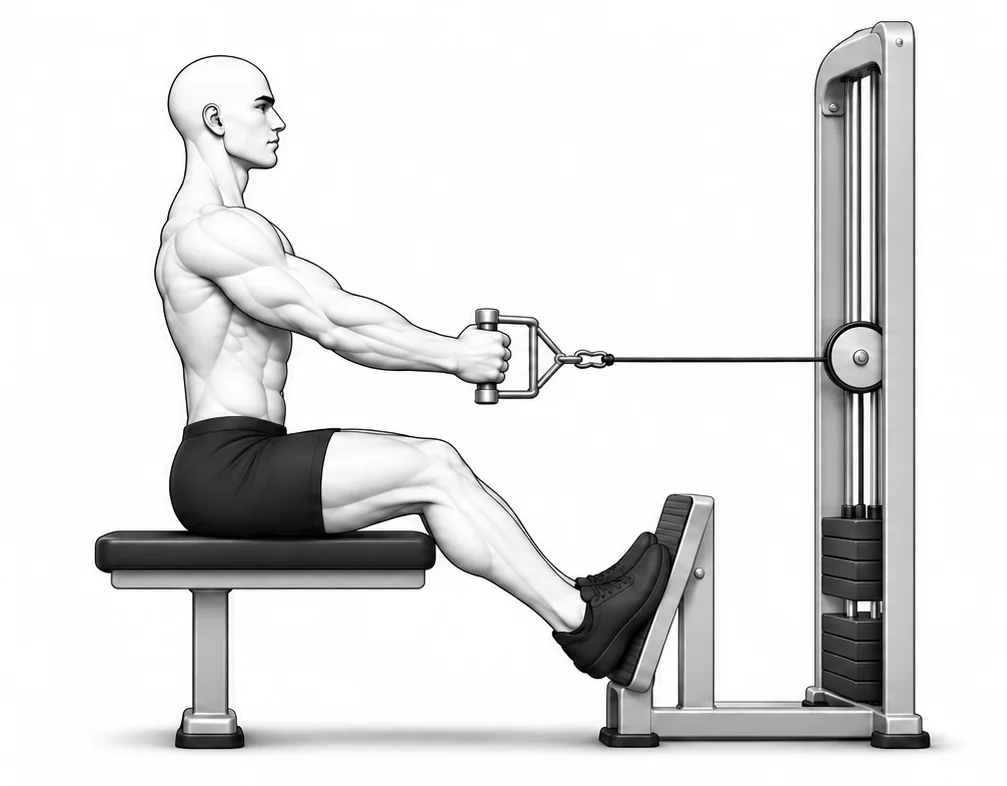
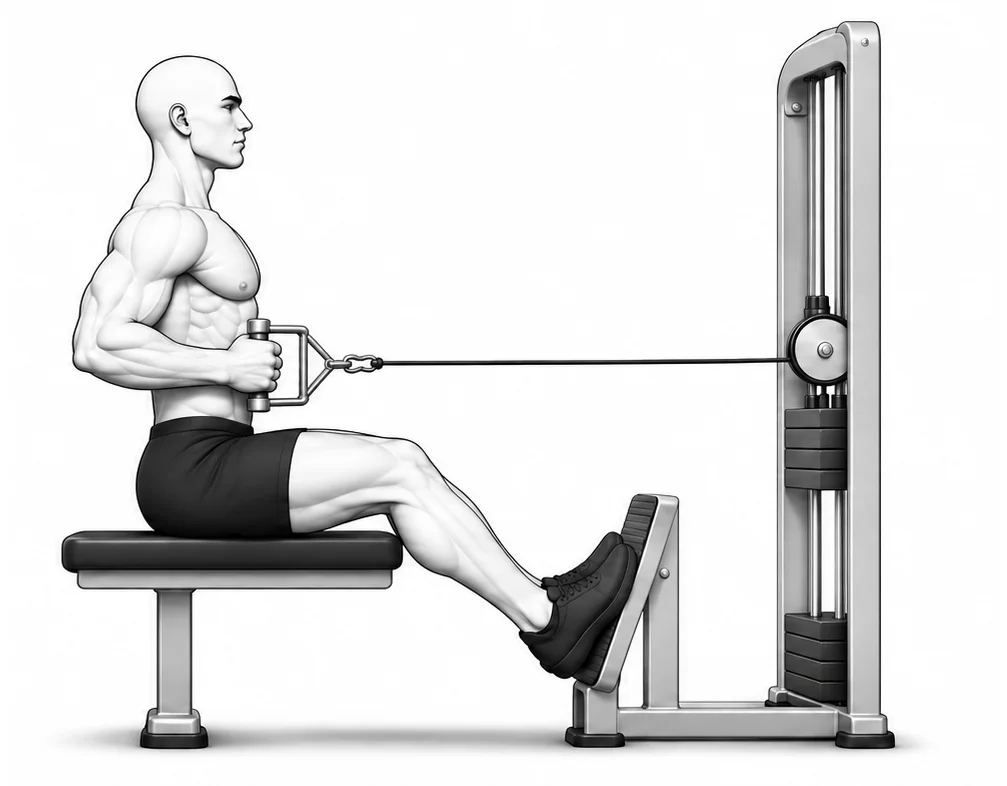
Muscles worked
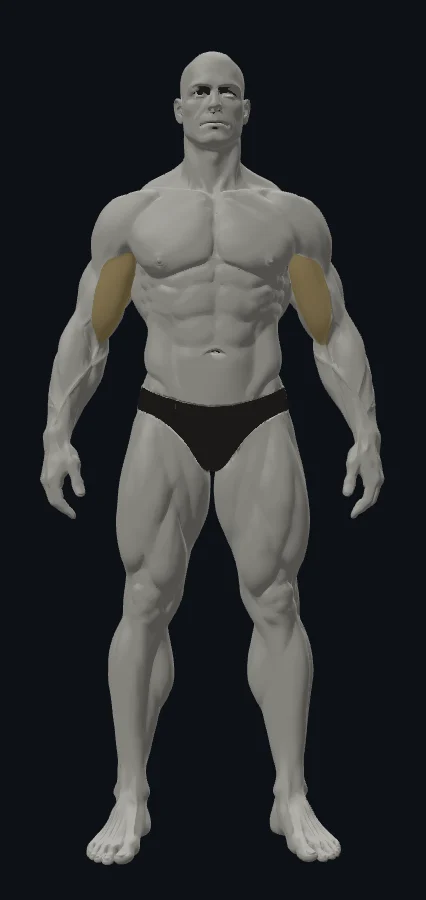
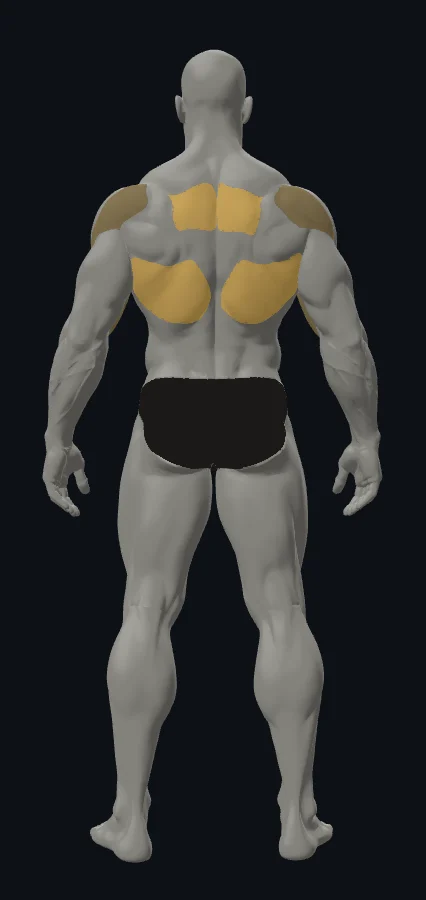
- PRIMARY
- Lats, middle and lower trapezius, rhomboids, rear deltoids
- ASSISTING
- Biceps, spinal erectors (to hold you upright)
The row trains the middle of the back. Which part works hardest depends on your grip.
- Lats pull the upper arms down and back. A narrow grip (the V-handle) used them more than a wide grip [1].
- Trapezius (middle and lower) and rhomboids squeeze the shoulder blades together. A wide grip used the upper, middle and lower trapezius more [1].
- Rear deltoids pull the arms back; their activity was similar with either grip [1].
- Biceps bend the elbows; also similar with either grip [1].
- Spinal erectors hold your torso still so the back muscles, not momentum, move the weight.
Setup
- Sit and brace your feet. Sit on the bench with your feet on the platform and a slight bend in your knees.
- Take the handle. Reach forward and grip the V-handle with your palms facing each other, without rounding your back.
- Sit tall. Slide back until your torso is upright and your arms are straight, with your chest up.
- Set your shoulders. Pull your shoulders down, away from your ears, before the first rep.
How to do it
- Start with your back, not your arms. Pull your shoulders back slightly first.
- Drive your elbows back. Pull the handle towards your lower ribs, keeping your elbows close to your sides.
- Squeeze. Pause for a moment with your shoulder blades together and your chest up.
- Return under control. Let your arms straighten and your shoulder blades slide forward, without rounding your lower back.
- Stay still. Your torso stays upright through the whole set; only your arms and shoulder blades move.
from fully straight arms with your shoulder blades spread, to the handle at your ribs with your shoulder blades together.
a smooth pull, a 1-second squeeze, and about 2 seconds back.
Common mistakes
Rocking back and forth
Your hips and lower back swing the weight, so your back muscles do less
Lower the weight and keep your torso upright through every rep.
Shrugging at the finish
Your upper traps take over and your shoulders ride up
Keep your shoulders down and think "elbows back", not "hands to chest".
Rounding the lower back at the stretch
Puts your spine in a flexed position under load
Reach with your arms and shoulder blades, not your lower back.
Pulling with the arms only
Short range, mostly biceps
Lead with your elbows and finish with your shoulder blades squeezed.
Make it easier or harder
The chest pad holds your torso, so you can't swing and only have to think about pulling.
Hold the handle at your ribs for 2 seconds on every rep. It removes momentum and makes the squeeze count.
Variations and alternatives
More trapezius and side shoulders [1]
You want more work for the trapezius and rear shoulders; a wide grip used the trapezius and side deltoid more than a narrow one [1].
Same muscles, hardest at the squeeze
You want to remove momentum and strengthen the squeeze.
Upper back, with no lower-back work
You want the most stable row, or your lower back is tired.
Lats and upper back, one side at a time
You want to train one side at a time, or you only have dumbbells.
More lats, in a vertical pull
You want a vertical pull for the lats instead of a horizontal one.
Where to fit it into your workout
On a back or pull day, either as the first back lift or after a pulldown.
Sets and reps: 3–4 sets of 8–12 reps. Muscle growth was similar across a wide range of loads, as long as sets were hard [2], so choose a weight you can pull with a still torso.
Rest: about 2 minutes between sets.
How often: twice a week for the back. Training a muscle at least twice a week grew it more than once [3].
What to pair it with: a pressing lift, such as the bench press, to balance pushing and pulling.
Safety
- Keep your back flat at the stretch: reach with your arms, not your lower back.
- Check with a doctor or physical therapist first if you have an injury, pain or a medical condition, or are pregnant.
- Stop the set if you feel sharp pain, joint pain, dizziness or chest pain. Muscle burn and effort are normal; pain is not.
- This page is general information about exercise technique. It isn't medical advice and doesn't replace advice from a professional who knows your health. See our Terms of Service.
Questions people ask
What muscles does the seated cable row work?
Mainly the lats, middle and lower trapezius, rhomboids and rear shoulders, with the biceps helping and the spinal erectors holding you upright [1].
Close grip or wide grip?
A close V-handle used the lats more; a wide grip used the trapezius and side shoulders more [1]. Use the close grip for most of your rows and add the wide grip if your upper back is the priority.
What is a good alternative to the seated cable row?
The chest-supported row is the closest, and the one-arm dumbbell row works without a cable station. See Variations and alternatives above.
Sources
- 1Padovan R, Cè E, Longo S, Tornatore G, Trentin C, Esposito F, Coratella G. High-density surface electromyography excitation of prime movers in the narrow vs. wide grip seated row exercise. J Hum Kinet. 2025. doi:10.5114/jhk/209550.
- 2Schoenfeld BJ, Grgic J, Ogborn D, Krieger JW. Strength and hypertrophy adaptations between low- vs. high-load resistance training: a systematic review and meta-analysis. J Strength Cond Res. 2017;31(12):3508–23.
- 3Schoenfeld BJ, Ogborn D, Krieger JW. Effects of resistance training frequency on measures of muscle hypertrophy. Sports Med. 2016;46(11):1689–97.