Lat Pulldown
The lat pulldown is a vertical pull: seated at a high cable pulley with your thighs locked under the pads, you pull a bar down to your upper chest and let it rise back under control.
- TYPE
- Compound: works shoulders and elbows together
- PRIMARY MUSCLES
- Lats (latissimus dorsi)
- ALSO WORKING
- Biceps, middle and lower trapezius, rhomboids, rear deltoids
- EQUIPMENT
- Lat pulldown machine with a straight bar
- DIFFICULTY
- Beginner
Form images
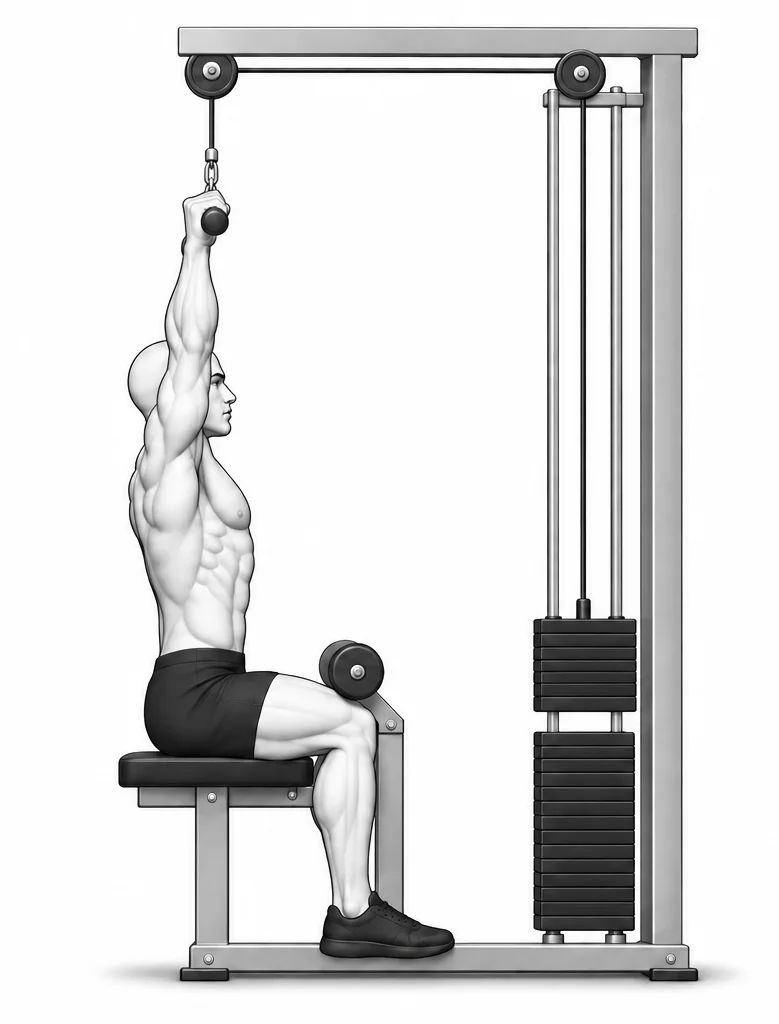
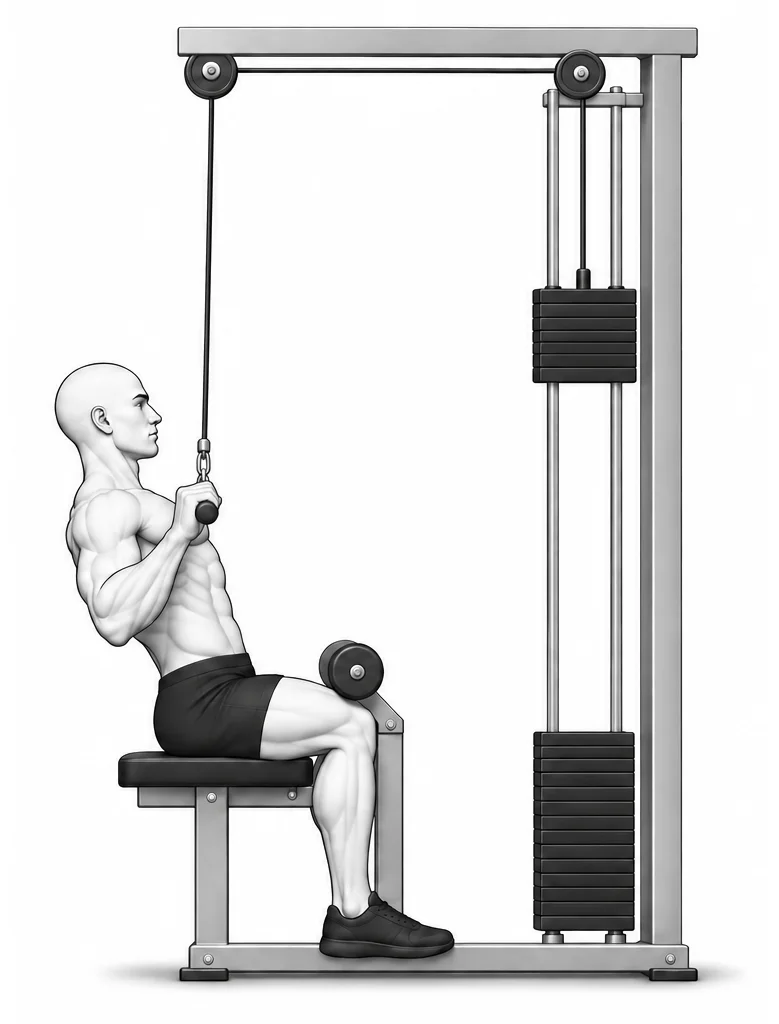
Muscles worked
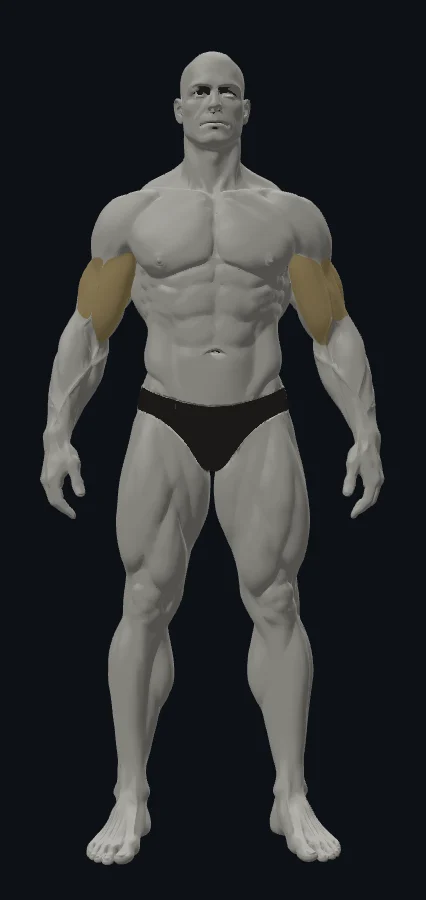
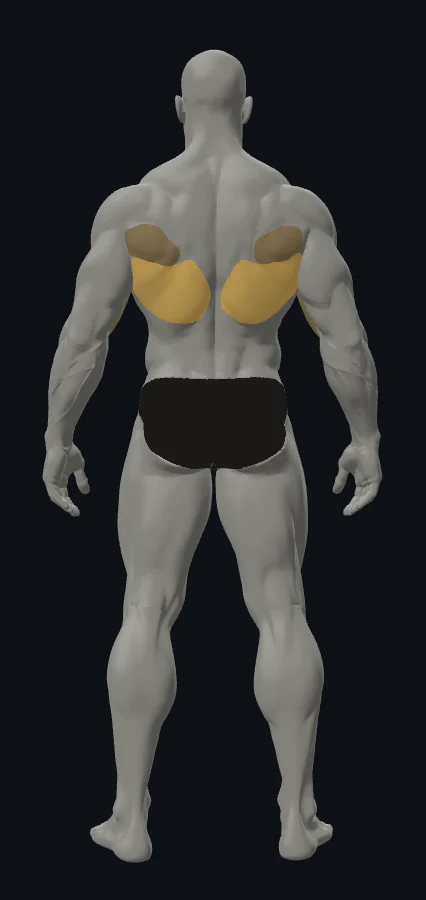
- PRIMARY
- Lats (latissimus dorsi)
- ASSISTING
- Biceps, middle and lower trapezius, rhomboids, rear deltoids
The pulldown is mainly a lat exercise, helped by the arms and the muscles between the shoulder blades.
- Lats pull your upper arms down to your sides. Their activity was similar at narrow, medium and wide grips [1], and with the bar pulled in front of the head or behind it [2].
- Biceps bend the elbows. A behind-the-neck pull used them most [2].
- Middle and lower trapezius and rhomboids pull the shoulder blades down and together at the bottom.
- Rear deltoids help pull the arms back. They also worked hardest behind the neck [2], which isn't a reason to pull that way (see Common mistakes).
Setup
- Set the thigh pads. Adjust them so your thighs are locked in and your feet are flat on the floor.
- Grip. Take an overhand grip about one and a half times shoulder width. Wider grips let people lift less without working the lats harder [1].
- Sit tall. Sit down with straight arms, chest up, and a slight lean back.
- Set your shoulders. Pull your shoulders down, away from your ears, before the first rep.
How to do it
- Start with your shoulder blades. Pull them down first, so your arms straighten into the start of the pull.
- Drive your elbows down. Pull the bar towards your upper chest, bringing your elbows down to your sides.
- Meet the bar with your chest. Lift your chest slightly as the bar arrives at collarbone level.
- Pause briefly at the bottom.
- Return under control. Let the bar rise until your arms are straight and you feel a stretch through your lats.
from straight arms overhead to the bar at your upper chest.
a smooth pull down, a short pause, and about 2 seconds up.
Common mistakes
Leaning far back and swinging
It becomes a row with momentum, and the lats do less
Keep a slight, fixed lean and lower the weight.
Pulling behind the neck
It didn't work the lats any more than pulling to the front, and the researchers advised avoiding it [2]
Always pull to the upper chest.
Shrugging at the bottom
Your upper traps take over and your shoulders ride up
Pull your shoulders down before your elbows bend.
Half reps
Cutting the top short skips the stretched part of the lift
Let your arms straighten fully between reps.
Make it easier or harder
A neutral grip with palms facing each other suits people who find a wide overhand grip uncomfortable; researchers proposed it as an alternative to the front pulldown [2].
It's the same movement, but you lift your own body, using the machine's assistance to get through the full range.
Variations and alternatives
Same lats; more biceps than a wide front pulldown [2]
You prefer a neutral grip, or wide grips bother your shoulders [2].
Same lats, with more weight [1]
You want to lift more weight; medium and narrow grips allowed heavier loads than a wide grip, with similar lat activity [1].
Lats, moving your own body
You're working towards your first pull-up.
Middle back, in a horizontal pull
You want a horizontal pull for the middle back instead.
Where to fit it into your workout
First or second on a back or pull day. It's a compound lift, so it comes before curls and other arm work.
Sets and reps: 3–4 sets of 8–12 reps. Heavy and light loads built similar muscle when the sets ended close to failure [3]; the limit here is the heaviest weight you can pull to your chest with no swing.
Rest: 90 seconds to 2 minutes.
How often: spread your back work over two or more sessions a week; a twice-weekly schedule beat once a week for muscle growth [4].
What to pair it with: a horizontal row, so both the lats and the middle back are trained, and an overhead or bench press on the same day if you train push and pull together.
Safety
- Lock your thighs under the pads, so heavy pulls don't lift you off the seat.
- Pull to the front, never behind the neck [2].
- Check with a doctor or physical therapist first if you have an injury, pain or a medical condition, or are pregnant.
- Stop the set if you feel sharp pain, joint pain, dizziness or chest pain. Muscle burn and effort are normal; pain is not.
- This page is general information about exercise technique. It isn't medical advice and doesn't replace advice from a professional who knows your health. See our Terms of Service.
Questions people ask
Should you lean back during lat pulldowns?
Slightly. A small, fixed lean lets the bar clear your face and reach your upper chest. Leaning far back and swinging turns it into a row with momentum.
Should my elbows be in or out?
Pull your elbows down towards your sides, slightly in front of your body. With a wide grip they'll be a little out; what matters is that they travel down, not back behind you.
How do I tell if I'm doing a lat pulldown correctly?
The bar reaches your upper chest, your torso barely moves, your shoulders stay down, and your arms straighten fully at the top. You should feel it under your armpits and down your back, not mainly in your biceps.
Why don't I feel my back during lat pulldowns?
Usually because the arms are doing the pulling. Start each rep by pulling your shoulder blades down, think about driving your elbows to your ribs, and lower the weight until you can.
Sources
- 1Andersen V, et al. Effects of grip width on muscle strength and activation in the lat pull-down. J Strength Cond Res. 2014;28(4).
- 2Sperandei S, Barros MAP, Silveira-Júnior PCS, Oliveira CG. Electromyographic analysis of three different types of lat pull-down. J Strength Cond Res. 2009;23(7):2033–8.
- 3Schoenfeld BJ, Grgic J, Ogborn D, Krieger JW. Strength and hypertrophy adaptations between low- vs. high-load resistance training: a systematic review and meta-analysis. J Strength Cond Res. 2017;31(12):3508–23.
- 4Schoenfeld BJ, Ogborn D, Krieger JW. Effects of resistance training frequency on measures of muscle hypertrophy. Sports Med. 2016;46(11):1689–97.