Split Squat with Dumbbell
The split squat is a lunge done in place: you stand in a long stride with a dumbbell in each hand and lower your back knee towards the floor, then stand back up. Each leg trains on its own.
- TYPE
- Compound: works hips, knees and ankles together
- PRIMARY MUSCLES
- Quads of the front leg
- ALSO WORKING
- Glutes, adductors, calves; hip muscles for balance
- EQUIPMENT
- A pair of dumbbells
- DIFFICULTY
- Beginner
Form images
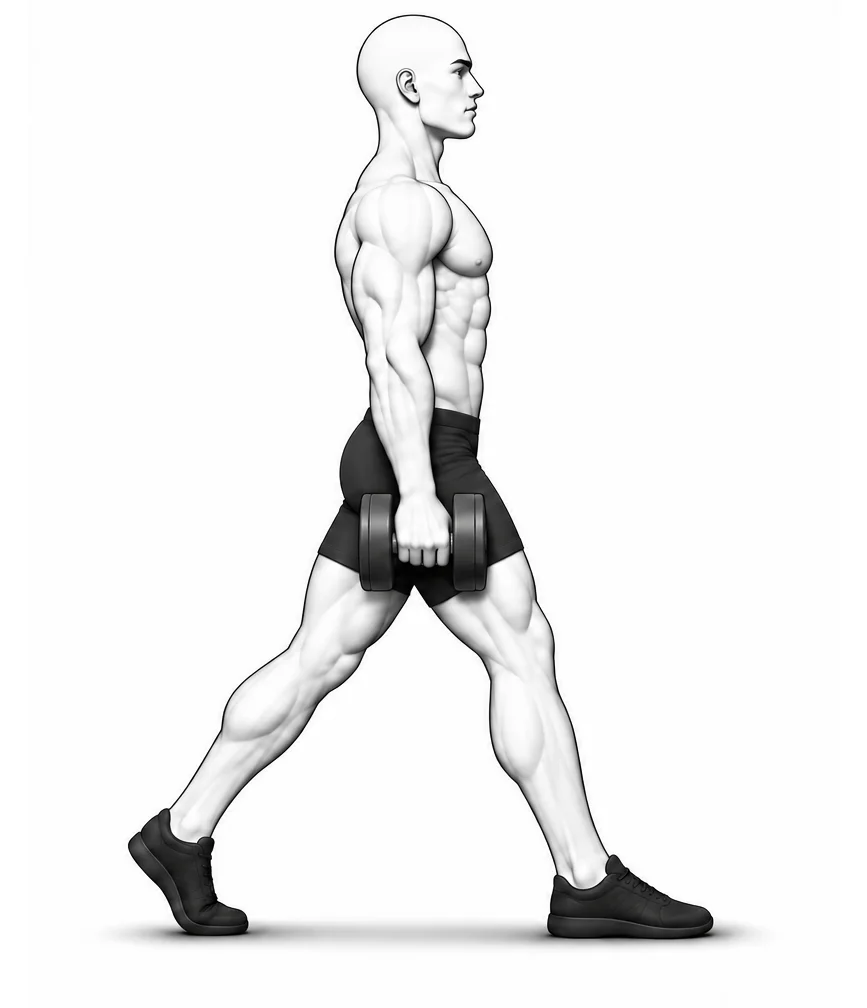
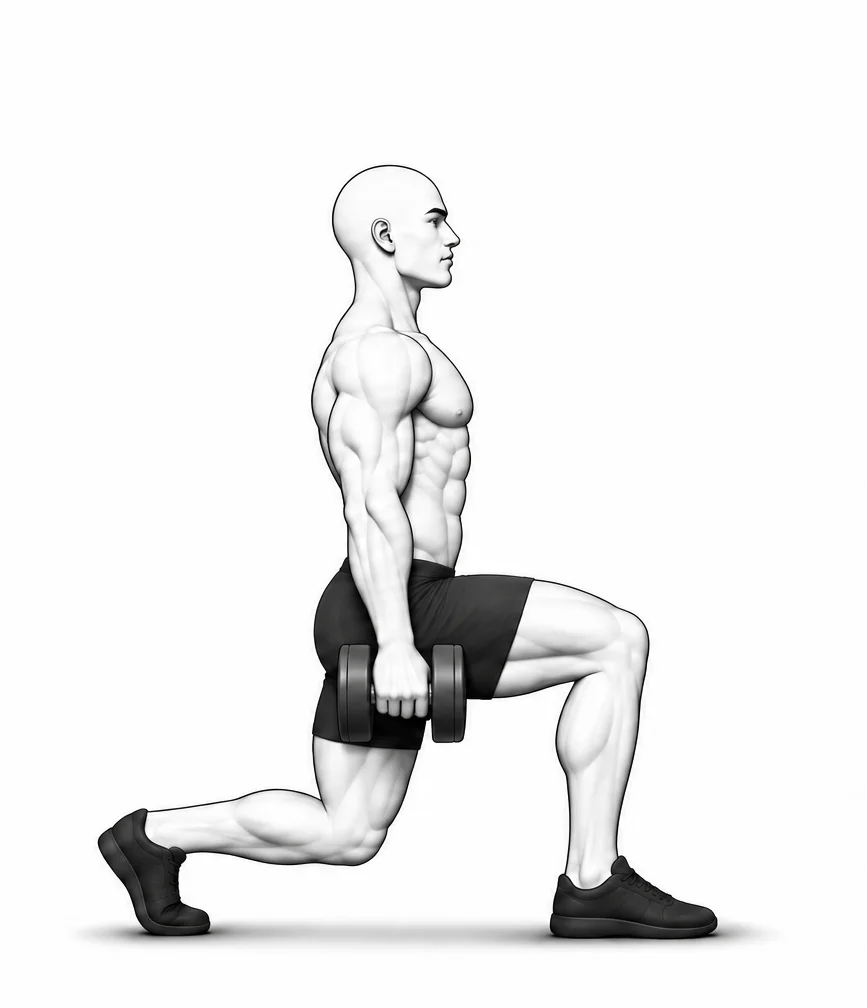
Muscles worked
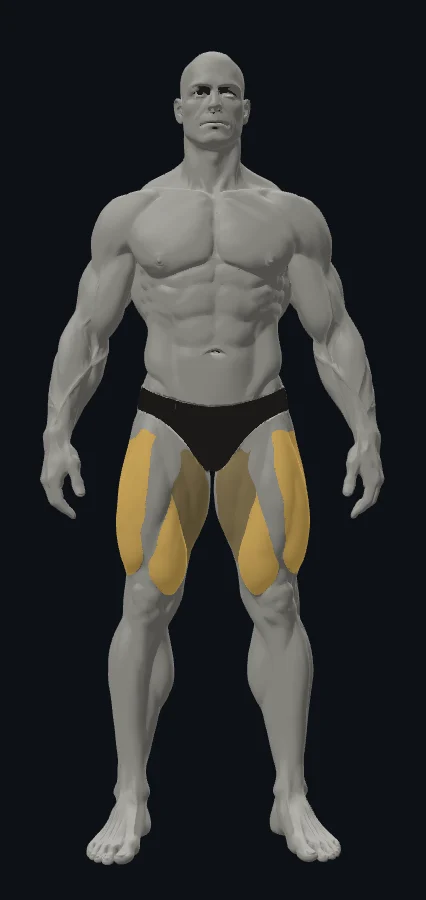
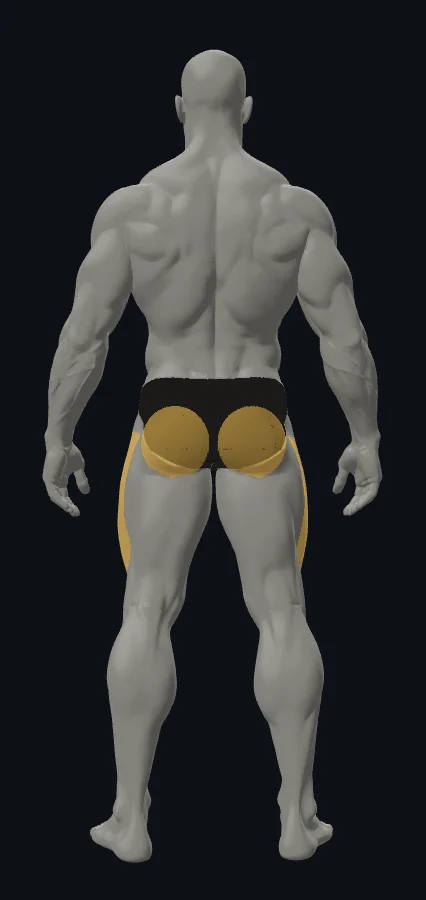
- PRIMARY
- Quads of the front leg
- ASSISTING
- Glutes, adductors, calves; hip muscles for balance
The split squat mainly works the quads of your front leg, with the glutes and adductors helping and your hip muscles keeping you balanced.
- Quads of the front leg straighten the knee and do most of the work.
- Glutes and adductors of the front leg straighten the hip as you stand.
- Hip and core muscles keep you from tipping sideways, since you're balancing on a narrow base.
- The back leg mostly balances you.
Setup
- Hold the dumbbells at your sides, arms straight.
- Step into a long stride. One foot forward, the other back, about hip-width apart side to side, like standing on two train tracks rather than a tightrope.
- Lift your back heel so you're on the ball of the back foot.
- Stand tall with your weight mostly on the front foot.
How to do it
- Drop your back knee straight down towards the floor.
- Keep your torso upright and your front heel down.
- Stop just above the floor, with your front thigh about level.
- Push through your front foot to stand back up.
- Finish all your reps on one side, then switch legs.
from standing in the stride to the back knee just above the floor.
about 2 seconds down, a steady drive up.
Common mistakes
Feet in a line
You wobble and can't load the leg
Keep your feet hip-width apart side to side.
Stride too short
The front knee shoots far forward and your heel lifts
Lengthen the stride until your front shin stays near vertical at the bottom.
Pushing off the back leg
The working leg does less
Keep most of your weight on the front foot.
Rushing the switch
The second leg gets a worse set
Rest briefly between sides if you need to.
Make it easier or harder
With your back foot raised on a bench, more of your weight goes onto the front leg. Five weeks of it improved strength, speed and agility as much as back squats did in young rugby players [1].
Variations and alternatives
Front leg, with a deeper stretch
The floor version feels easy with the heaviest dumbbells you have.
Both legs at once
You want a two-legged squat with one weight.
Quads, with no balance demand
Balance limits how much you can load your legs.
Same muscles, stepping back each rep
You want a more dynamic single-leg lift.
Where to fit it into your workout
After your main squat or leg press, as single-leg work.
Sets and reps: 2–3 sets of 8–12 reps per leg. Heavy and light loads built similar muscle when the sets ended close to failure [2].
Rest: about 1 minute between legs, 90 seconds between rounds.
How often: train your legs at least twice a week [3].
What to pair it with: a hamstring lift such as the stiff-legged dumbbell deadlift or a leg curl.
Safety
- Start with your weaker leg and match the reps on the other side.
- Hold something steady for balance until you can do the reps without wobbling.
- Check with a doctor or physical therapist first if you have an injury, pain or a medical condition, or are pregnant.
- Stop the set if you feel sharp pain, joint pain, dizziness or chest pain. Muscle burn and effort are normal; pain is not.
- This page is general information about exercise technique. It isn't medical advice and doesn't replace advice from a professional who knows your health. See our Terms of Service.
Questions people ask
What's the difference between a dumbbell split squat and a Bulgarian split squat?
In a split squat both feet are on the floor. In a Bulgarian split squat your back foot rests on a bench behind you, which puts more weight on the front leg and makes it harder.
What are the benefits of the dumbbell split squat?
It trains each leg on its own, so a weaker side can't hide, and it needs only a pair of dumbbells.
How do I work my glutes more in a split squat?
Take a slightly longer stride and let your torso lean forward a little, so the front hip bends more.
Sources
- 1Speirs DE, Bennett MA, Finn CV, Turner AP. Unilateral vs. bilateral squat training for strength, sprints, and agility in academy rugby players. J Strength Cond Res. 2016;30(2):386–92.
- 2Schoenfeld BJ, Grgic J, Ogborn D, Krieger JW. Strength and hypertrophy adaptations between low- vs. high-load resistance training: a systematic review and meta-analysis. J Strength Cond Res. 2017;31(12):3508–23.
- 3Schoenfeld BJ, Ogborn D, Krieger JW. Effects of resistance training frequency on measures of muscle hypertrophy. Sports Med. 2016;46(11):1689–97.