Pallof Press
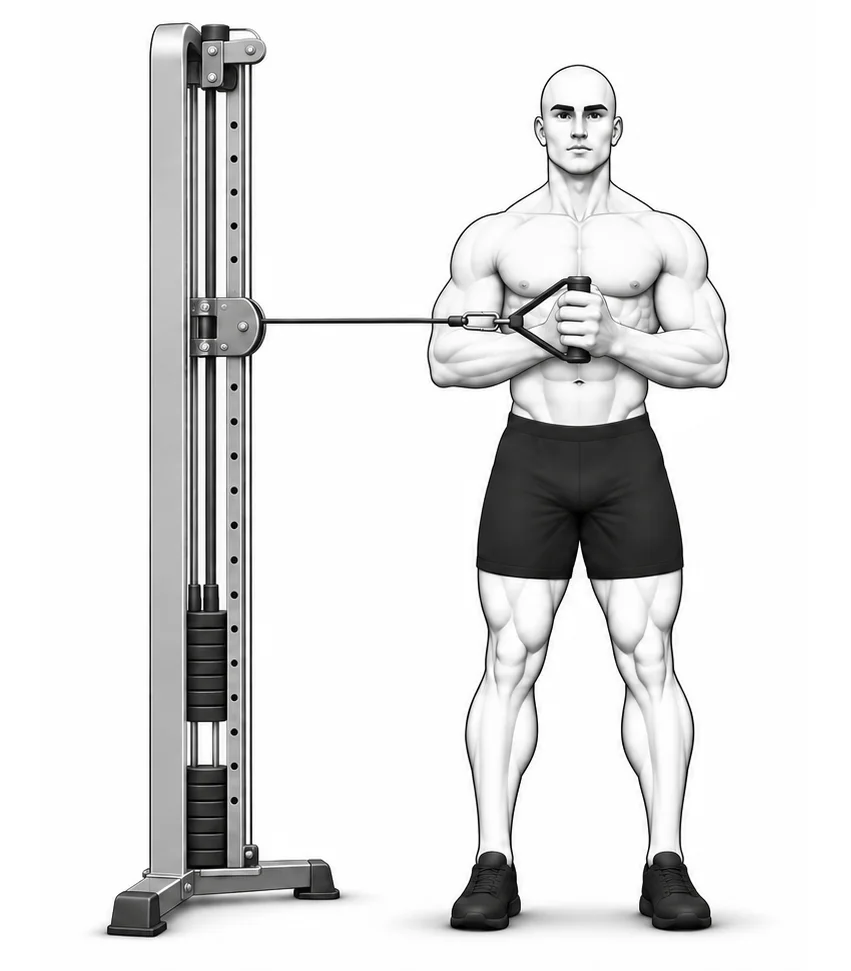
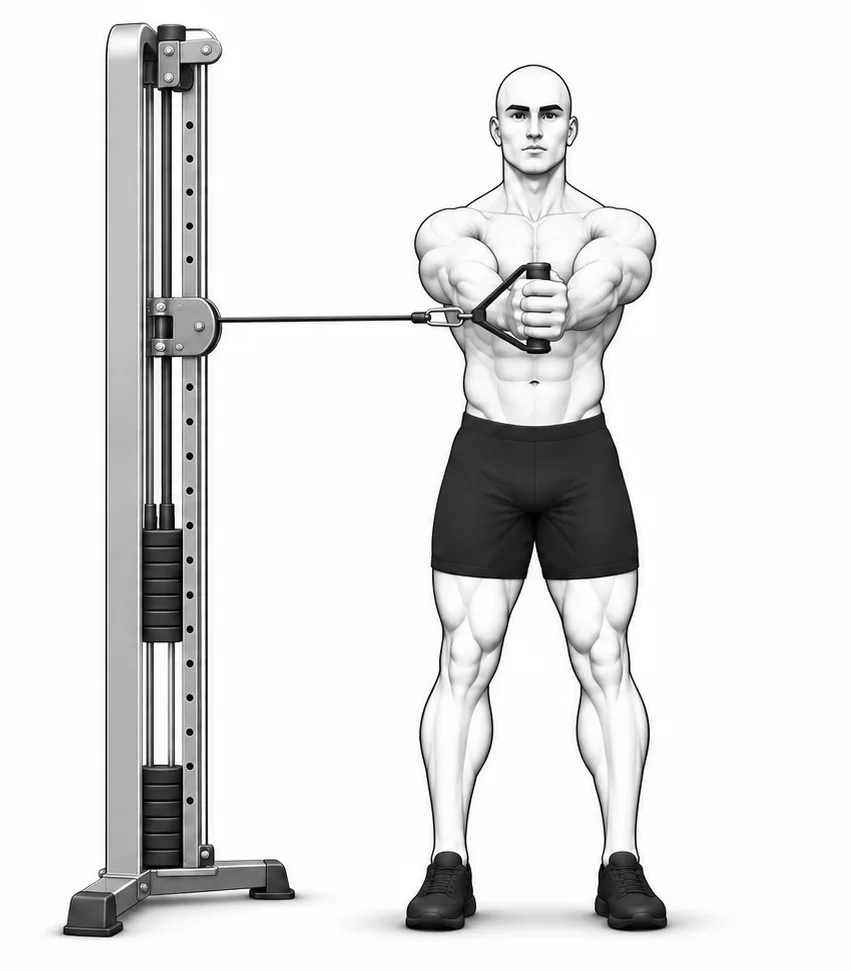
The Pallof press is a core exercise where the goal is not to move. Standing side-on to a cable, you hold the handle at your chest and press it straight out in front of you. The cable tries to twist you towards the machine, and your trunk works to stay square.
- TYPE
- Core: trains the trunk muscles
- PRIMARY MUSCLES
- Obliques and the deep trunk muscles
- ALSO WORKING
- Rectus abdominis, glutes, shoulders holding the handle out
- EQUIPMENT
- Cable station with a single handle (or a resistance band)
- DIFFICULTY
- Beginner
Form images
Muscles worked
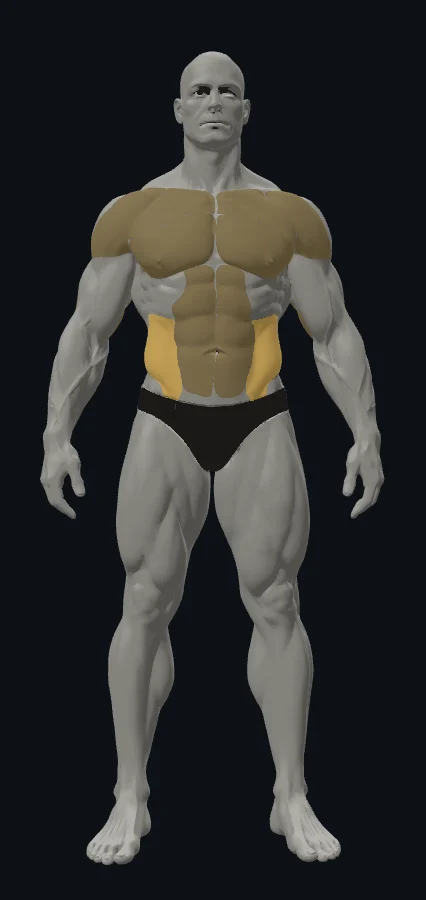
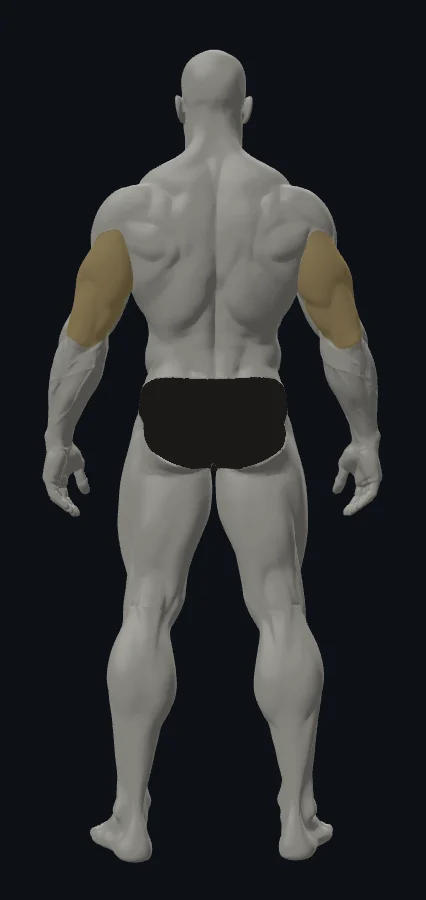
- PRIMARY
- Obliques and the deep trunk muscles
- ASSISTING
- Rectus abdominis, glutes, shoulders holding the handle out
The Pallof press trains your trunk to resist twisting.
- Obliques at your sides work on both sides to stop your trunk turning towards the cable.
- Deep trunk muscles around your spine stiffen the whole midsection.
- Rectus abdominis braces the front.
- Glutes keep your hips square.
- Why pressing out makes it harder: with your hands at your chest the cable has little leverage. As your arms straighten, the handle moves further from your body, so the twisting force on your trunk grows [1].
Setup
- Set the pulley to chest height and attach a single handle.
- Stand side-on to the machine and hold the handle against your chest with both hands.
- Step away from the machine until the cable pulls firmly, then set your feet about shoulder-width apart, with your knees soft.
- Brace your trunk with your ribs down and your hips and shoulders facing forward.
How to do it
- Press the handle straight out from the middle of your chest.
- Hold it there for 2–3 seconds with your arms straight.
- Keep facing forward; don't let the cable turn your hips or shoulders.
- Bring the handle back to your chest under control.
- Finish the set, then turn round and repeat with the other side to the machine.
from the handle at your chest to arms straight out in front.
a 1-second press, a 2–3 second hold, a 1-second return.
Common mistakes
Turning towards the machine
Your trunk gives in to the cable, which is the one thing it's meant to stop
Step closer, or lighten the stack, until you can stay square.
Leaning away from the cable
You fight it with your body weight instead of your trunk
Stand upright, with your weight even on both feet.
Pressing at an angle
Your arms drift towards the machine and the twist lessens
Press straight out from the middle of your chest.
Rushing the hold
The hold is where your trunk works hardest
Hold for a full 2–3 seconds every rep.
Make it easier or harder
A wider stance also makes it easier to stay square.
A longer hold works too.
Variations and alternatives
Same muscles, with a band tied to a post
You train at home or the cables are busy.
Same muscles, with less help from your legs
You want a harder version without more weight.
Deep trunk muscles, holding your spine still on the floor
You want a floor exercise that also resists movement.
Abs and trunk, holding a straight line
You have no equipment.
Where to fit it into your workout
Place: at the end of a session, or between sets of a main lift as filler, since it's light.
Sets and reps: 2–3 sets of 8–10 presses on each side, each with a 2–3 second hold.
Rest: about 30 seconds between sides, a minute between sets.
How often: two or three times a week.
What to pair it with: the cable crunch, so your trunk trains both resisting rotation and bending.
Safety
- Step back to the machine before letting go of the handle, so the cable doesn't snap it back.
- Brace before you press; if your lower back hurts, shorten the hold or lighten the load.
- Check with a doctor or physical therapist first if you have an injury, pain or a medical condition, or are pregnant.
- Stop the set if you feel sharp pain, joint pain, dizziness or chest pain. Muscle burn and effort are normal; pain is not.
- This page is general information about exercise technique. It isn't medical advice and doesn't replace advice from a professional who knows your health. See our Terms of Service.
Questions people ask
How do you do a cable Pallof press?
Set a single handle at chest height and stand side-on to the machine. Step away until the cable pulls, then press the handle straight out from your chest and hold it without letting the cable turn you. Bring it back and repeat, then switch sides.
What muscles does the Pallof press work?
Mainly the obliques and the deep muscles around your spine, with your abs, glutes and shoulders helping. They work to stop your trunk from twisting [1].
Are Pallof presses actually effective?
For training your trunk to resist twisting, yes; that's what the exercise is built to do [1]. It doesn't make your abs bigger the way a weighted crunch can, so many people do both.
Sources
- 1Mullane M, Turner A, Bishop C. The Pallof press. Strength Cond J. 2021;43(2):121–8.