Machine Chest Press
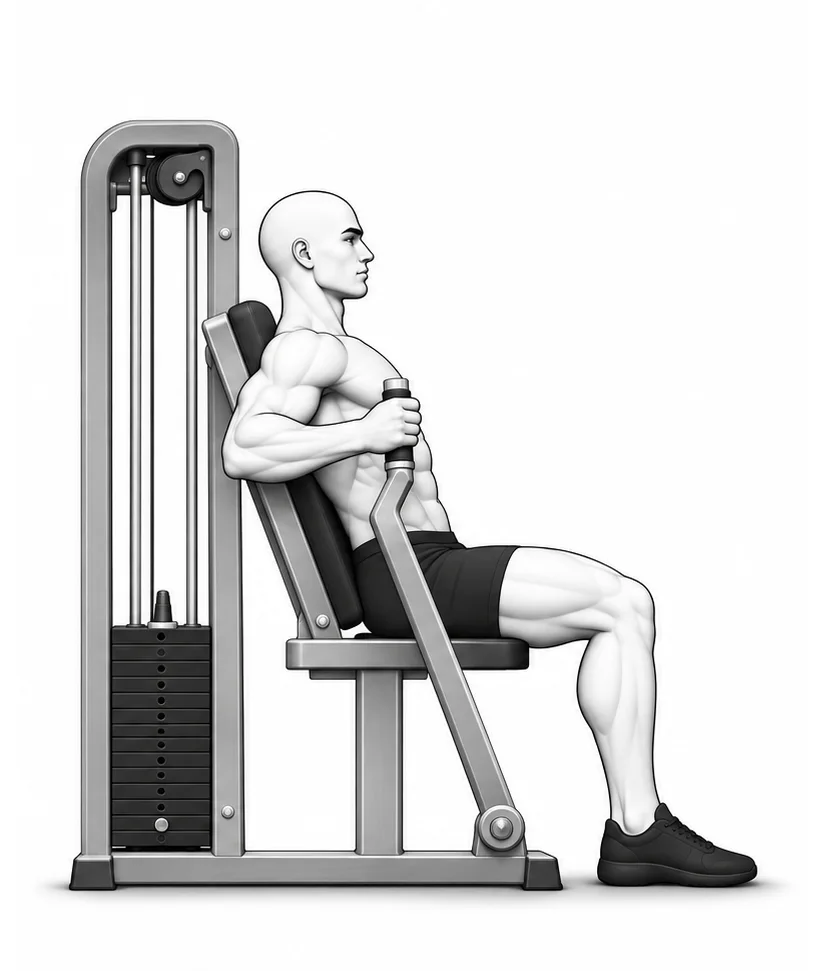
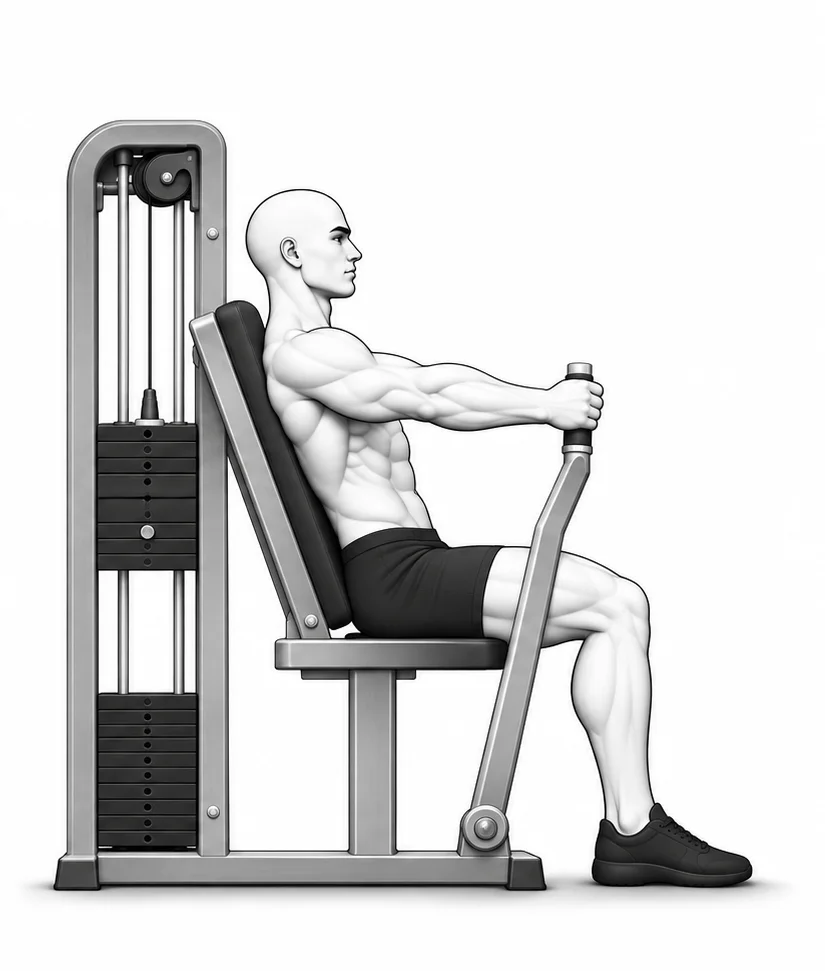
The machine chest press is a seated bench press. With your back against the pad, you push two handles forward until your arms are straight, then let them come back towards your chest. The machine sets the path, so you can push hard without balancing anything.
- TYPE
- Compound: works shoulders and elbows together
- PRIMARY MUSCLES
- Chest (pectoralis major)
- ALSO WORKING
- Front delts, triceps
- EQUIPMENT
- Seated chest press machine
- DIFFICULTY
- Beginner
Form images
Muscles worked
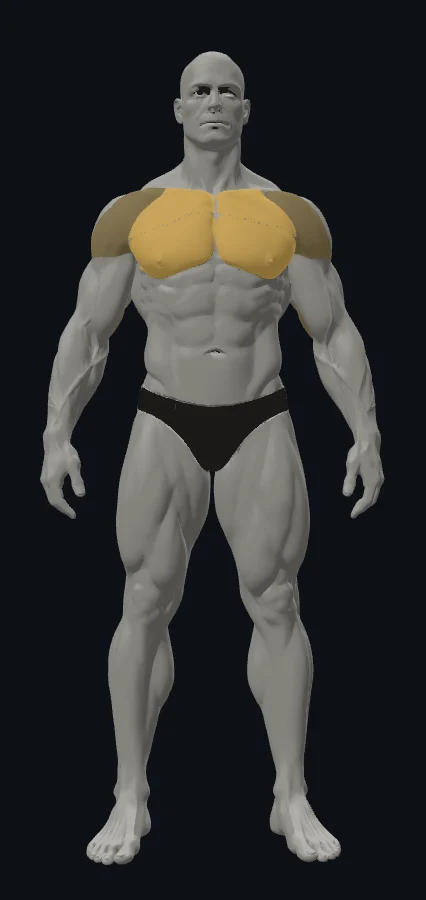
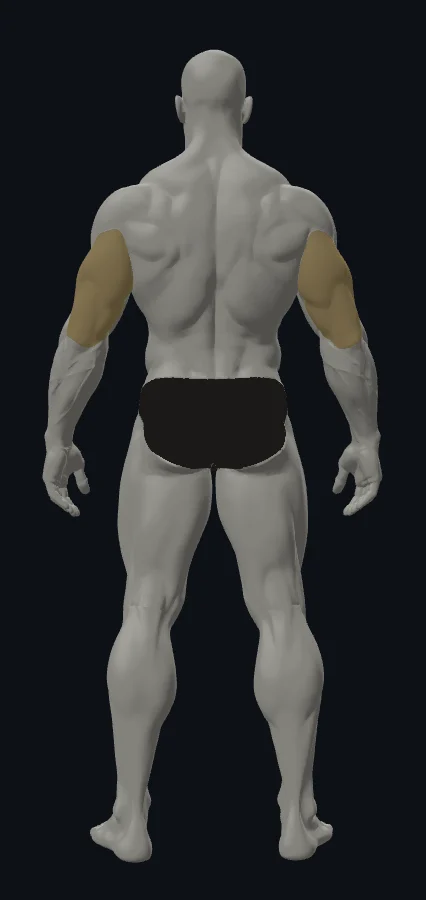
- PRIMARY
- Chest (pectoralis major)
- ASSISTING
- Front delts, triceps
The chest press is mainly a chest exercise, with the front delts and triceps helping.
- Chest brings your upper arms forward and does most of the work.
- Front delts help at the shoulder.
- Triceps straighten your elbows at the end of each press.
- Machine and free-weight training built similar muscle across the studies a 2023 review pooled [1], so this is a full alternative to the bench press, not a lesser one.
Setup
- Set the seat so the handles sit level with the middle of your chest.
- Sit back with your head, upper back and hips against the pad.
- Feet flat on the floor or the footrest.
- Take the handles with straight wrists and pull your shoulder blades back into the pad.
How to do it
- Press the handles forward smoothly.
- Keep your shoulder blades on the pad; don't let your shoulders roll forward.
- Stop just short of locking your elbows.
- Let the handles come back slowly until you feel a stretch across your chest.
- Start the next press before the weight stack rests.
from a full chest stretch with the handles beside your chest to arms almost straight.
a steady press, about 2–3 seconds back.
Common mistakes
Seat too low
The handles end up high and your shoulders take over
Raise the seat until the handles line up with mid-chest.
Shoulders rolling forward
The chest does less and the front of the shoulder does more
Keep your shoulder blades pinned to the pad.
Short returns
The stretched part of the rep gets skipped
Let the handles come back until your chest is stretched.
Elbows flared straight out
It strains the front of the shoulder
Keep your elbows a little below shoulder height.
Make it easier or harder
Variations and alternatives
Upper chest
Your machine has an incline setting.
Chest, with each arm working on its own
You want free weights and a deeper stretch.
Chest, front delts and triceps, with the most load
You want the heaviest pressing lift.
Chest and triceps, plus your trunk
You have no equipment.
Where to fit it into your workout
Place: a good first lift for beginners on push day; for experienced lifters, a second press after the bench, when you're tired and want a safe path.
Sets and reps: 3 working sets in the 8–15 range. Heavy and light loads built similar muscle when the sets ended close to failure [2], so the machine is a good place to push sets hard.
Rest: 90 seconds to 2 minutes.
How often: chest work on two or more days a week [3].
What to pair it with: a seated cable row on the same day, so your back gets as much work as your chest.
Safety
- Set the seat before you load it; the handles should start at mid-chest.
- Use the start lever or foot bar if the machine has one, so the handles start forward.
- Check with a doctor or physical therapist first if you have an injury, pain or a medical condition, or are pregnant.
- Stop the set if you feel sharp pain, joint pain, dizziness or chest pain. Muscle burn and effort are normal; pain is not.
- This page is general information about exercise technique. It isn't medical advice and doesn't replace advice from a professional who knows your health. See our Terms of Service.
Questions people ask
Where should the handles be on the chest press?
Level with the middle of your chest. Raise or lower the seat to get them there.
Is the chest press machine as good as the bench press?
For building muscle, yes: across the studies one review pooled, machines and free weights built similar muscle [1].
What does a converging chest press do?
The handles move inward as you press, like your hands would with dumbbells. It works the same muscles.
Can I do a chest press with dumbbells?
Yes: the dumbbell bench press is the free-weight version.
Sources
- 1Haugen ME, Vårvik FT, Larsen S, Haugen AS, van den Tillaar R, Bjørnsen T. Effect of free-weight vs. machine-based strength training on maximal strength, hypertrophy and jump performance – a systematic review and meta-analysis. BMC Sports Sci Med Rehabil. 2023;15(1):103.
- 2Schoenfeld BJ, Grgic J, Ogborn D, Krieger JW. Strength and hypertrophy adaptations between low- vs. high-load resistance training: a systematic review and meta-analysis. J Strength Cond Res. 2017;31(12):3508–23.
- 3Schoenfeld BJ, Ogborn D, Krieger JW. Effects of resistance training frequency on measures of muscle hypertrophy. Sports Med. 2016;46(11):1689–97.