Assisted Pull-Up
The assisted pull-up is a pull-up with help. You kneel on a pad that a counterweight pushes upward, so you only lift part of your body weight. The more weight you select, the more help you get.
- TYPE
- Compound: works shoulders and elbows together
- PRIMARY MUSCLES
- Lats (latissimus dorsi)
- ALSO WORKING
- Biceps, lower and middle trapezius, rhomboids, rear delts, chest
- EQUIPMENT
- Assisted pull-up machine (counterweighted knee pad or platform, overhead handles)
- DIFFICULTY
- Beginner
Form images
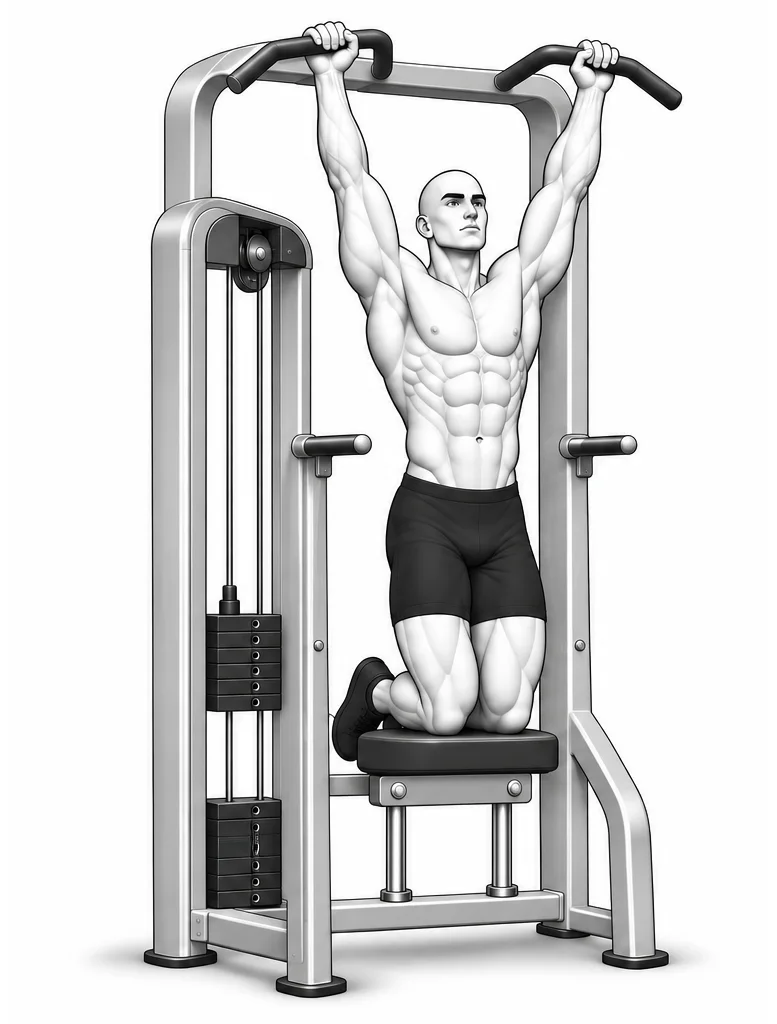
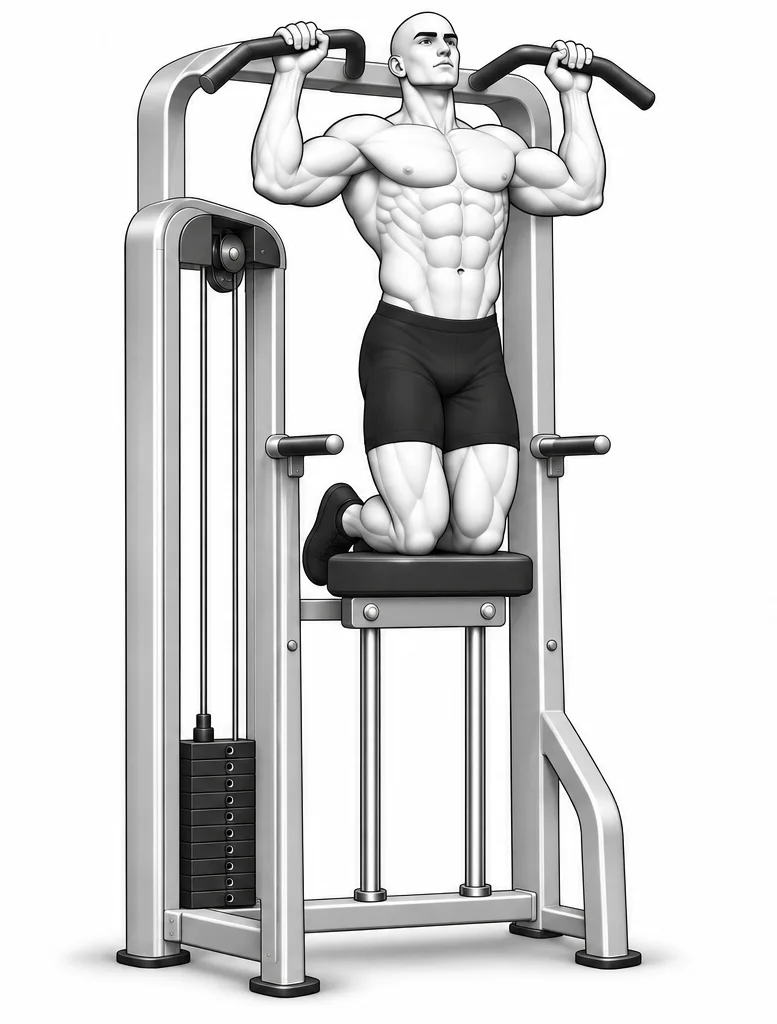
Muscles worked
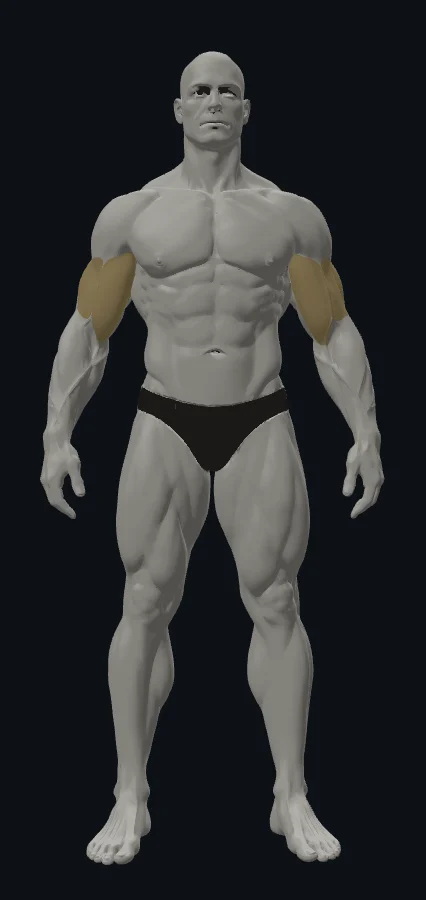
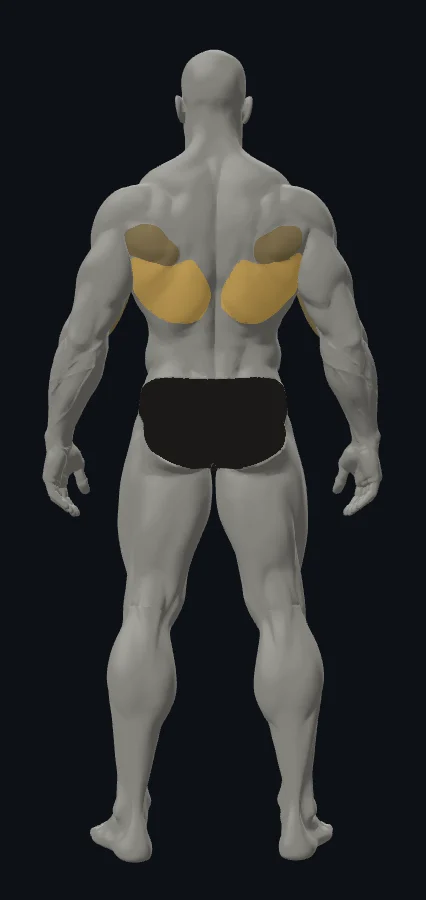
- PRIMARY
- Lats (latissimus dorsi)
- ASSISTING
- Biceps, lower and middle trapezius, rhomboids, rear delts, chest
The assisted pull-up is mainly a lat exercise. Your grip decides which helpers work hardest.
- Lats pull your elbows down to your sides and lift your body. They worked hard with both an overhand and an underhand grip [1].
- Lower trapezius pulls your shoulder blades down. It worked more with the overhand (pull-up) grip than the underhand (chin-up) grip [1].
- Biceps bend your elbows. They worked more with the underhand grip [1].
- Chest helps pull your upper arms down, also more with the underhand grip [1].
- Middle trapezius, rhomboids and rear delts draw your shoulder blades together near the top.
Setup
- Choose the assistance. Select a weight that lets you do 6–10 full reps. More weight means more help.
- Climb the steps and take the handles: overhand, a little wider than your shoulders.
- Kneel on the pad. Press it down with one knee, then bring the other knee on. Some machines have a platform you stand on instead.
- Hang tall. Let your arms straighten, keep your body upright, and pull your shoulders slightly down.
How to do it
- Start the pull by drawing your shoulder blades down.
- Drive your elbows down towards your ribs until your chin passes the handles.
- Keep your chest up and your body still; your legs stay on the pad.
- Lower yourself slowly until your arms are straight again.
- Finish the set at the bottom, then step off one foot at a time.
from a full hang with straight arms to your chin above the handles.
a steady pull, about 2–3 seconds down.
Common mistakes
Too much assistance
The pad lifts you and your back does little
Use the least help that still gives you full reps, and take a plate off once every set reaches 12.
Stopping short of a straight arm
The stretched bottom of the rep is skipped
Lower until your elbows are straight before the next pull.
Craning your neck to reach the handles
Your chin gets there but your back hasn't finished the pull
Bring your chest towards the handles and keep your neck long.
Stepping off at the top
The pad springs up as your weight leaves it
End every set at the bottom with your arms straight, then step down.
Make it easier or harder
It's the same pulling direction, done seated with the weight set separately from your body.
Take one plate off at a time. Once you need very little help, add slow lowers from the top of a regular pull-up bar.
Variations and alternatives
More biceps and chest [1]
You want more arm work, or the underhand grip feels stronger.
Same muscles; the band helps most at the bottom
You train with a pull-up bar and a band instead of the machine.
Lats, with less biceps and lower-back work than a chin-up [2]
You want to set the load directly, or the machine is taken.
Middle back, in a horizontal pull
You want the other pulling direction in the same session.
Where to fit it into your workout
Place: first on a back or pull day, while you're fresh.
Sets and reps: 3 sets of 6–12 reps; once every set reaches 12, take one plate of assistance off. Heavy and light loads built similar muscle when the sets ended close to failure [3].
Rest: about 2 minutes.
How often: back on two or more days a week [4].
What to pair it with: a vertical press, such as the machine shoulder press.
Safety
- Get on and off at the bottom of the rep, one foot at a time; the pad rises quickly when your weight leaves it.
- Check the pin is fully in the weight stack before you climb on.
- Check with a doctor or physical therapist first if you have an injury, pain or a medical condition, or are pregnant.
- Stop the set if you feel sharp pain, joint pain, dizziness or chest pain. Muscle burn and effort are normal; pain is not.
- This page is general information about exercise technique. It isn't medical advice and doesn't replace advice from a professional who knows your health. See our Terms of Service.
Questions people ask
What muscles does the assisted pull-up machine work?
Mainly the lats, with the biceps, lower and middle trapezius, rear delts and chest helping. An underhand grip brings in more biceps and chest; an overhand grip more lower trapezius [1].
Does more weight make it easier or harder?
Easier. The weight you select is the counterweight helping you up, so the less you select, the more of your own body you lift.
How do I get off the machine safely?
Finish the set at the bottom with your arms straight. Step one foot back onto the step, then the other, then let go of the handles.
Can I use a band instead?
Yes. Loop a band over a pull-up bar and put a knee or foot in it. It helps most at the bottom, where it's stretched furthest, and least at the top.
Sources
- 1Youdas JW, Amundson CL, Cicero KS, Hahn JJ, Harezlak DT, Hollman JH. Surface electromyographic activation patterns and elbow joint motion during a pull-up, chin-up, or perfect-pullup™ rotational exercise. J Strength Cond Res. 2010;24(12):3404–14.
- 2Doma K, Deakin GB, Ness KF. Kinematic and electromyographic comparisons between chin-ups and lat-pull down exercises. Sports Biomech. 2013;12(3):302–13.
- 3Schoenfeld BJ, Grgic J, Ogborn D, Krieger JW. Strength and hypertrophy adaptations between low- vs. high-load resistance training: a systematic review and meta-analysis. J Strength Cond Res. 2017;31(12):3508–23.
- 4Schoenfeld BJ, Ogborn D, Krieger JW. Effects of resistance training frequency on measures of muscle hypertrophy. Sports Med. 2016;46(11):1689–97.