Incline Dumbbell Press
The incline dumbbell press is a dumbbell press on a bench tilted up at about 30 degrees. Pressing at that angle shifts more of the work to the upper part of your chest.
- TYPE
- Compound: works shoulders and elbows together
- PRIMARY MUSCLES
- Upper chest (clavicular pectoralis major)
- ALSO WORKING
- Front delts, triceps, the rest of the chest
- EQUIPMENT
- A pair of dumbbells and an adjustable bench
- DIFFICULTY
- Beginner
Form images
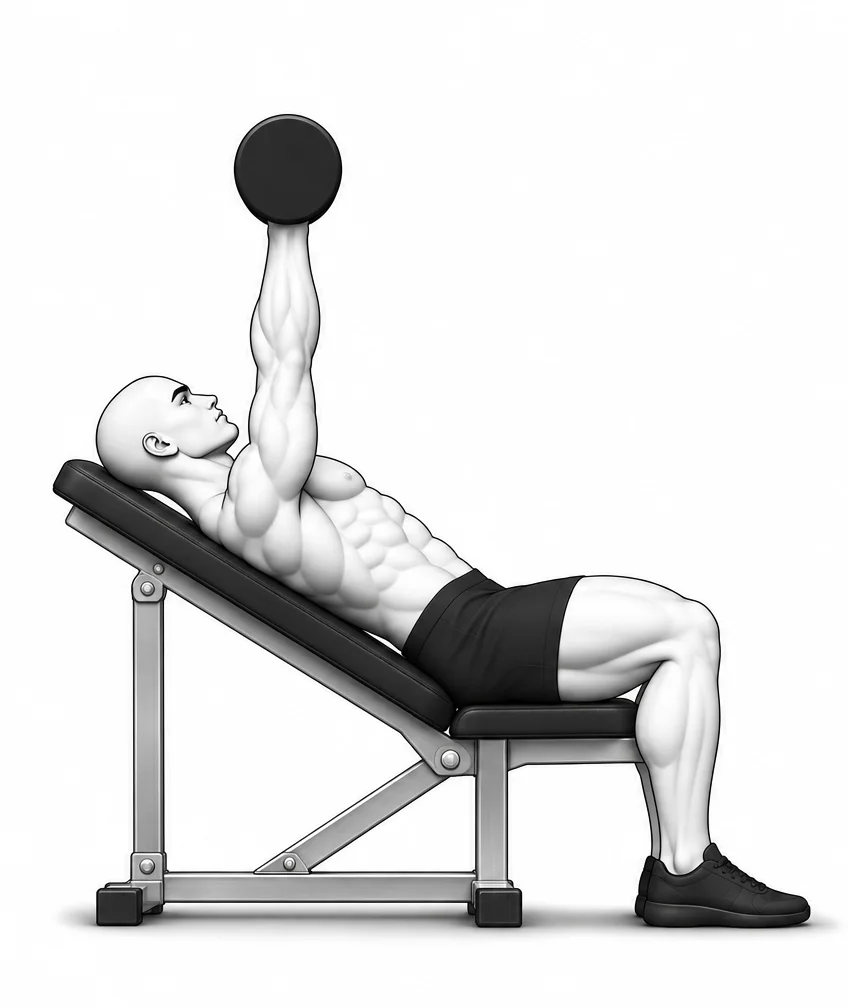
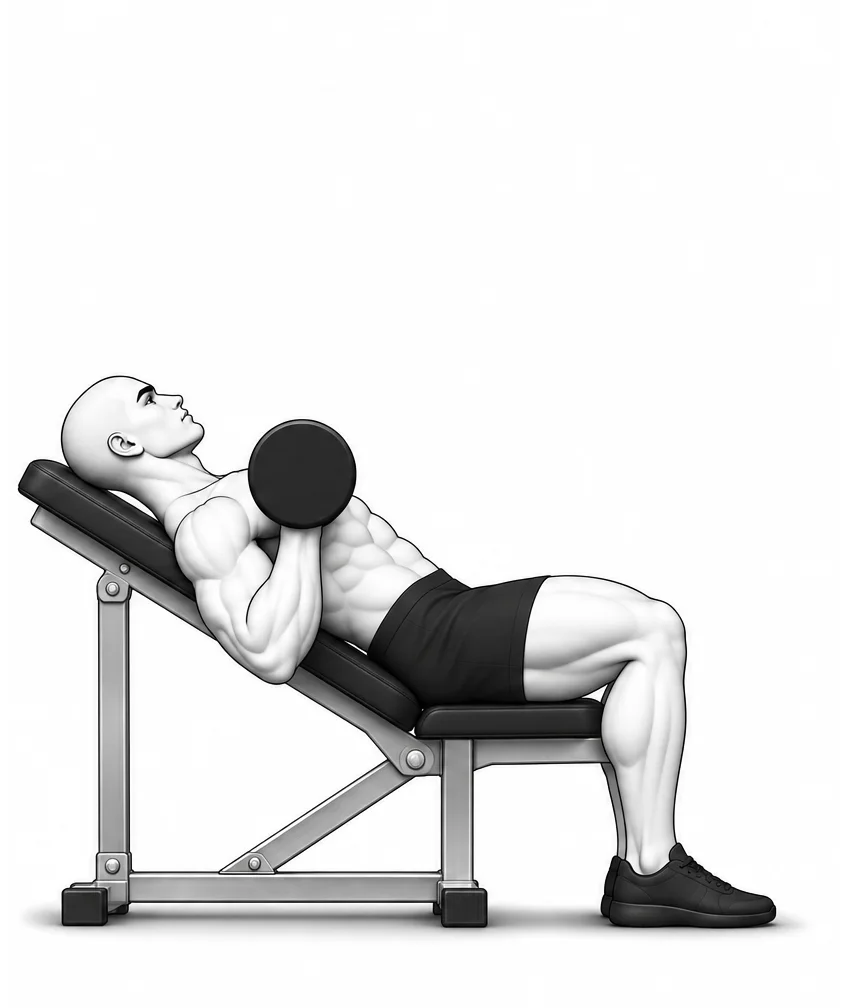
Muscles worked
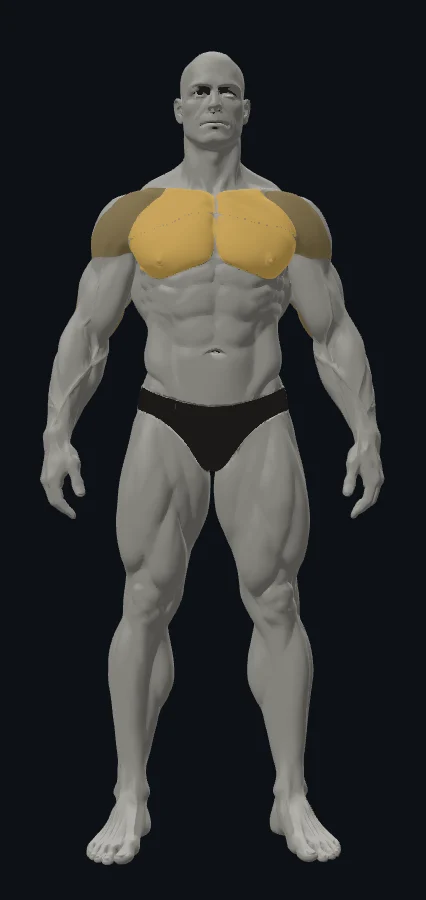
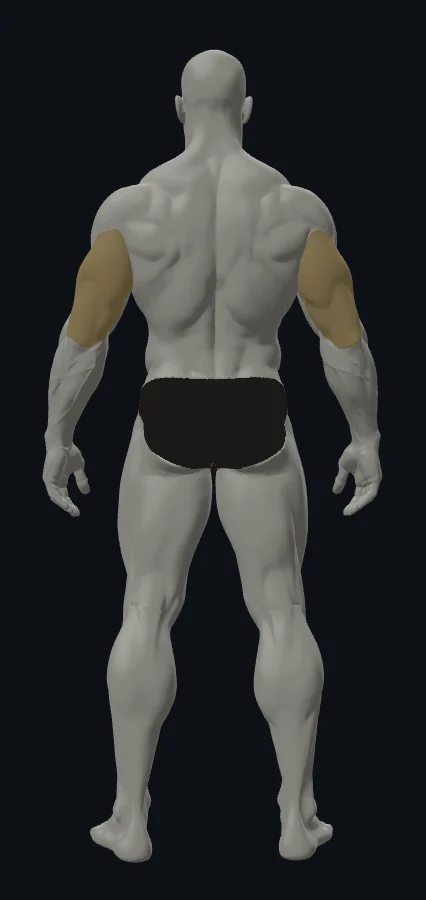
- PRIMARY
- Upper chest (clavicular pectoralis major)
- ASSISTING
- Front delts, triceps, the rest of the chest
The incline press aims at the upper chest, with the front delts working harder than on a flat bench.
- Upper chest gets the most work. In untrained men, eight weeks of incline pressing grew the upper chest more than flat pressing, while the middle and lower chest grew about the same with either [1].
- Front delts help more as the bench gets steeper.
- Triceps finish each press.
Setup
- Set the bench to about 30 degrees. Much steeper, and it becomes a shoulder press.
- Sit with the dumbbells on your thighs, then lie back and bring them up to your chest.
- Plant your feet and keep your hips on the seat.
- Pull your shoulder blades back and down into the bench.
How to do it
- Lower the dumbbells to the sides of your upper chest.
- Keep your elbows angled about 45 degrees from your body, forearms vertical.
- Stop at a full stretch across your upper chest.
- Press up over your upper chest, not your face.
- Keep your hips down on the seat throughout.
from a full upper-chest stretch to arms nearly straight.
about 2–3 seconds down, a steady press up.
Common mistakes
Bench too steep
Your front delts take over from your chest
Lower the bench to about 30 degrees.
Hips lifting off the seat
It flattens the angle and turns it into a flat press
Keep your hips and lower back on the bench.
Pressing towards your face
The weights drift back over your shoulders
Press up over your upper chest.
Elbows flared out
It loads the front of the shoulder
Angle your elbows in to about 45 degrees.
Make it easier or harder
Variations and alternatives
Upper chest, with more load
You want to load the incline more heavily.
The middle and lower chest
You want a flat press.
Chest, with no balance needed
You want the press without steadying the weights.
Front delts
You want shoulder work, not chest work.
Where to fit it into your workout
Place: lead with it on a day you want to prioritise the upper chest; otherwise do it second, after a flat press.
Sets and reps: 2–4 sets of 8–12. Heavy and light loads built similar muscle when the sets ended close to failure [2].
Rest: take the time you need to start each set fresh, usually about 2 minutes.
How often: two chest sessions a week or more [3].
What to pair it with: a flat press on another day, so the middle and lower chest get their own work.
Safety
- Bring the dumbbells down to your chest and onto your thighs to finish, rather than dropping them.
- Check the bench is locked at its angle before you sit.
- Check with a doctor or physical therapist first if you have an injury, pain or a medical condition, or are pregnant.
- Stop the set if you feel sharp pain, joint pain, dizziness or chest pain. Muscle burn and effort are normal; pain is not.
- This page is general information about exercise technique. It isn't medical advice and doesn't replace advice from a professional who knows your health. See our Terms of Service.
Questions people ask
What's the difference between the incline dumbbell press and the bench press?
The incline aims more at the upper chest. In a training study, incline pressing grew the upper chest more than flat pressing [1].
What angle should the bench be?
About 30 degrees. Above 45 degrees, your front delts do most of the work.
What are the benefits of the incline dumbbell press?
More work for the upper chest, and each arm presses on its own.
Sources
- 1Chaves SFN, Rocha-Júnior VA, Encarnação IGA, et al. Effects of horizontal and incline bench press on neuromuscular adaptations in untrained young men. Int J Exerc Sci. 2020;13(6):859–72.
- 2Schoenfeld BJ, Grgic J, Ogborn D, Krieger JW. Strength and hypertrophy adaptations between low- vs. high-load resistance training: a systematic review and meta-analysis. J Strength Cond Res. 2017;31(12):3508–23.
- 3Schoenfeld BJ, Ogborn D, Krieger JW. Effects of resistance training frequency on measures of muscle hypertrophy. Sports Med. 2016;46(11):1689–97.