Stiff-Legged Dumbbell Deadlift
The stiff-legged dumbbell deadlift is a hip hinge: holding a dumbbell in each hand with your knees slightly bent and fixed, you push your hips back and lower the weights down your legs until you feel a strong stretch in your hamstrings, then stand back up.
- TYPE
- Compound: works the hips, with the spine held still
- PRIMARY MUSCLES
- Hamstrings
- ALSO WORKING
- Glutes, lower back (spinal erectors), grip
- EQUIPMENT
- A pair of dumbbells
- DIFFICULTY
- Beginner
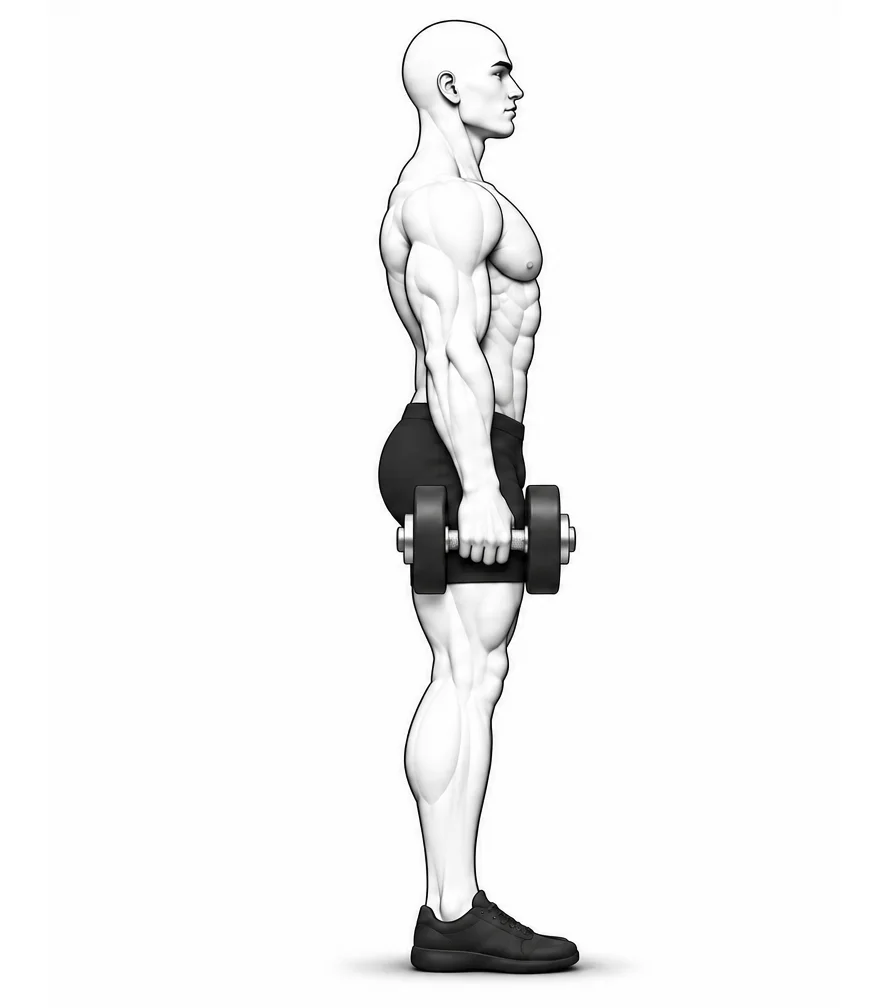
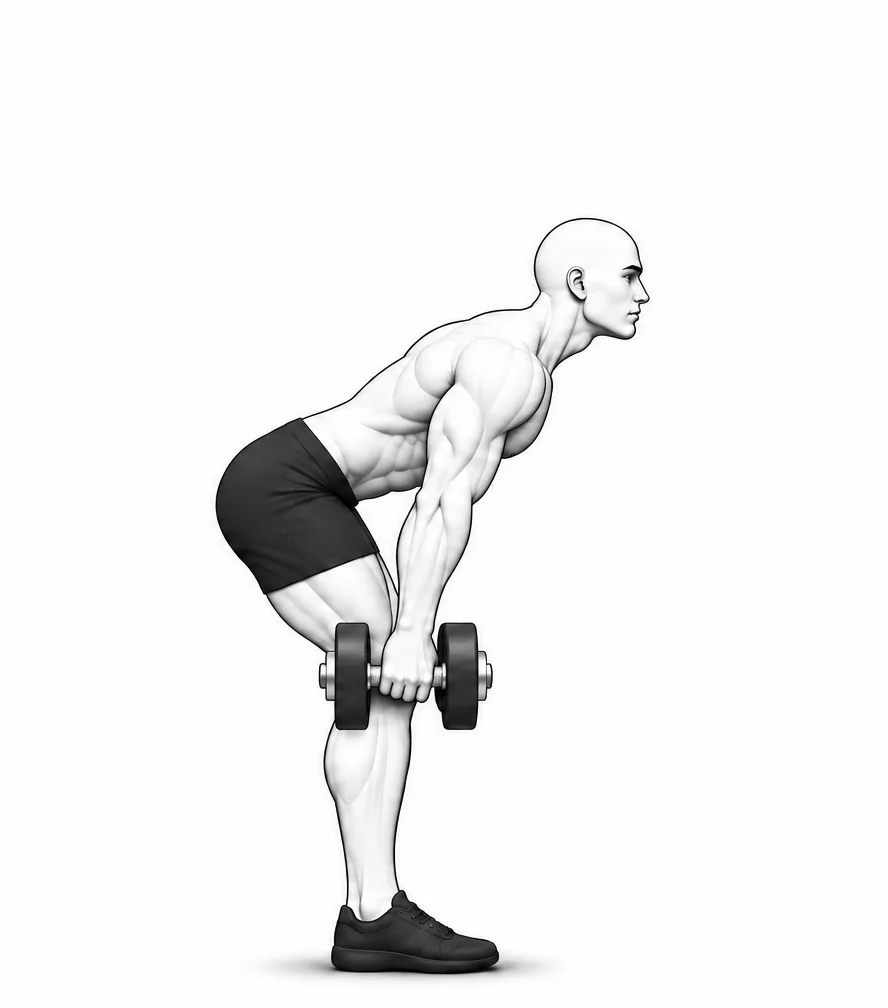
Form images
Muscles worked
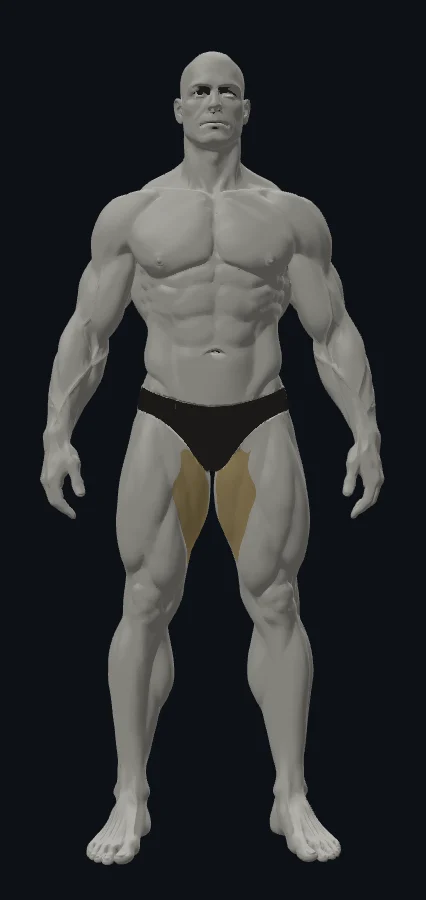
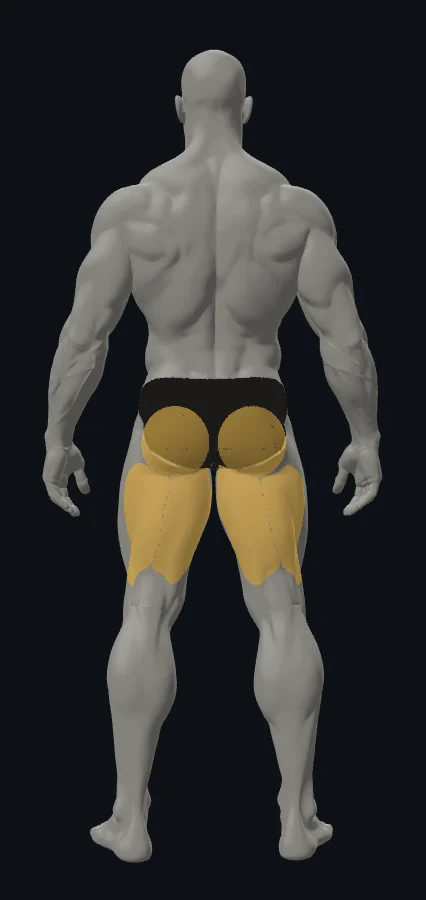
- PRIMARY
- Hamstrings
- ASSISTING
- Glutes, lower back (spinal erectors), grip
The stiff-legged deadlift is mainly a hamstring exercise, helped by the glutes, while your lower back holds your spine still.
- Hamstrings lower and raise your torso by working at the hip. In a comparison of hamstring exercises, the Romanian deadlift (the barbell version of this hinge) and the glute-ham raise worked them hardest [1].
- Glutes help straighten the hips, most near the top.
- Lower back muscles hold your spine still while your hips move.
- Grip holds the dumbbells.
Setup
- Stand with your feet about hip-width apart.
- Hold a dumbbell in each hand in front of your thighs, palms facing you.
- Soften your knees with a slight bend, and keep that bend for the whole set.
- Brace. Chest up, shoulders back, a breath into your belly.
How to do it
- Push your hips back as if closing a car door with your backside.
- Slide the dumbbells down close to your legs.
- Keep your back flat and your knee bend the same.
- Stop when your hamstrings are fully stretched, or just before your back starts to round. For most people the dumbbells reach mid-shin.
- Drive your hips forward to stand tall.
from standing to the point your hamstrings are fully stretched with your back still flat.
about 2–3 seconds down, a steady drive up.
Common mistakes
Rounding the back to reach lower
Your spine takes the load instead of your hips
Stop where your back is still flat; depth comes with hamstring flexibility.
Bending the knees as you go down
It turns into a squat and the hamstrings do less
Set a slight bend at the start and keep it fixed.
Dumbbells drifting forward
The weight pulls on your lower back
Keep them brushing your legs.
Leaning back at the top
It adds nothing and strains the lower back
Stand tall and stop.
Make it easier or harder
It's the same hinge, and a bar lets you load it much more heavily.
Variations and alternatives
One leg at a time, plus balance
You want to train each side on its own.
Hamstrings and glutes, with more load [1]
You've learned the hinge and want to go heavier.
Hamstrings at the knee, with no back involvement
Your back is tired, or you want to isolate the hamstrings. Seated curls grew the hamstrings more than lying curls [2].
Glutes
You want glute work without loading your back.
Where to fit it into your workout
Early on leg day or on a lower-body pull day, after any squat.
Sets and reps: 3 sets of 8–12 reps. Heavy and light loads built similar muscle when the sets ended close to failure [3]; here the limit is the heaviest weight you can lower with a flat back.
Rest: 90 seconds to 2 minutes.
How often: train your hamstrings at least twice a week [4].
What to pair it with: a squat or leg press for the quads, and a seated leg curl to train the hamstrings at the knee.
Safety
- Keep your back flat. Stop each rep before it starts to round.
- Start light while you learn the hinge; your hamstrings will be sore the first few times.
- Check with a doctor or physical therapist first if you have an injury, pain or a medical condition, or are pregnant.
- Stop the set if you feel sharp pain, joint pain, dizziness or chest pain. Muscle burn and effort are normal; pain is not.
- This page is general information about exercise technique. It isn't medical advice and doesn't replace advice from a professional who knows your health. See our Terms of Service.
Questions people ask
What's the difference between a stiff-legged deadlift and a Romanian deadlift?
They're close relatives. Both hinge at the hips with the knees bent slightly and held still. The stiff-legged version usually keeps the knees straighter and often lowers the weight further; the Romanian deadlift is usually done with a barbell and a slightly softer knee.
What muscles does the stiff-legged dumbbell deadlift work?
Mainly the hamstrings, with the glutes and the lower back muscles that hold your spine still.
How do I feel it more in my glutes?
Squeeze your glutes to finish each rep and drive your hips fully forward at the top. The glutes work most near lockout.
What's a good alternative?
A seated leg curl if you want to spare your back, or a hip thrust machine for the glutes.
Sources
- 1McAllister MJ, Hammond KG, Schilling BK, Ferreria LC, Reed JP, Weiss LW. Muscle activation during various hamstring exercises. J Strength Cond Res. 2014;28(6):1573–80.
- 2Maeo S, Huang M, Wu Y, et al. Greater hamstrings muscle hypertrophy but similar damage protection after training at long versus short muscle lengths. Med Sci Sports Exerc. 2021;53(4):825–37.
- 3Schoenfeld BJ, Grgic J, Ogborn D, Krieger JW. Strength and hypertrophy adaptations between low- vs. high-load resistance training: a systematic review and meta-analysis. J Strength Cond Res. 2017;31(12):3508–23.
- 4Schoenfeld BJ, Ogborn D, Krieger JW. Effects of resistance training frequency on measures of muscle hypertrophy. Sports Med. 2016;46(11):1689–97.