Side Lateral Raise
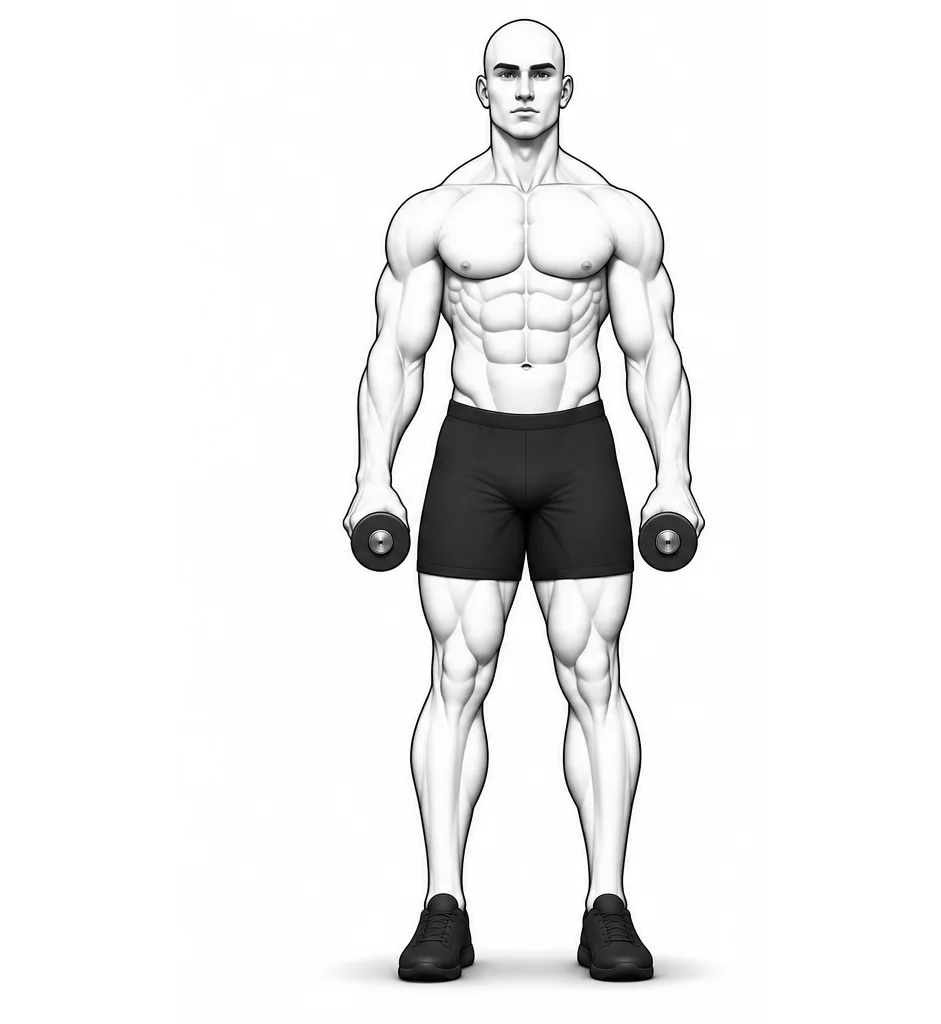
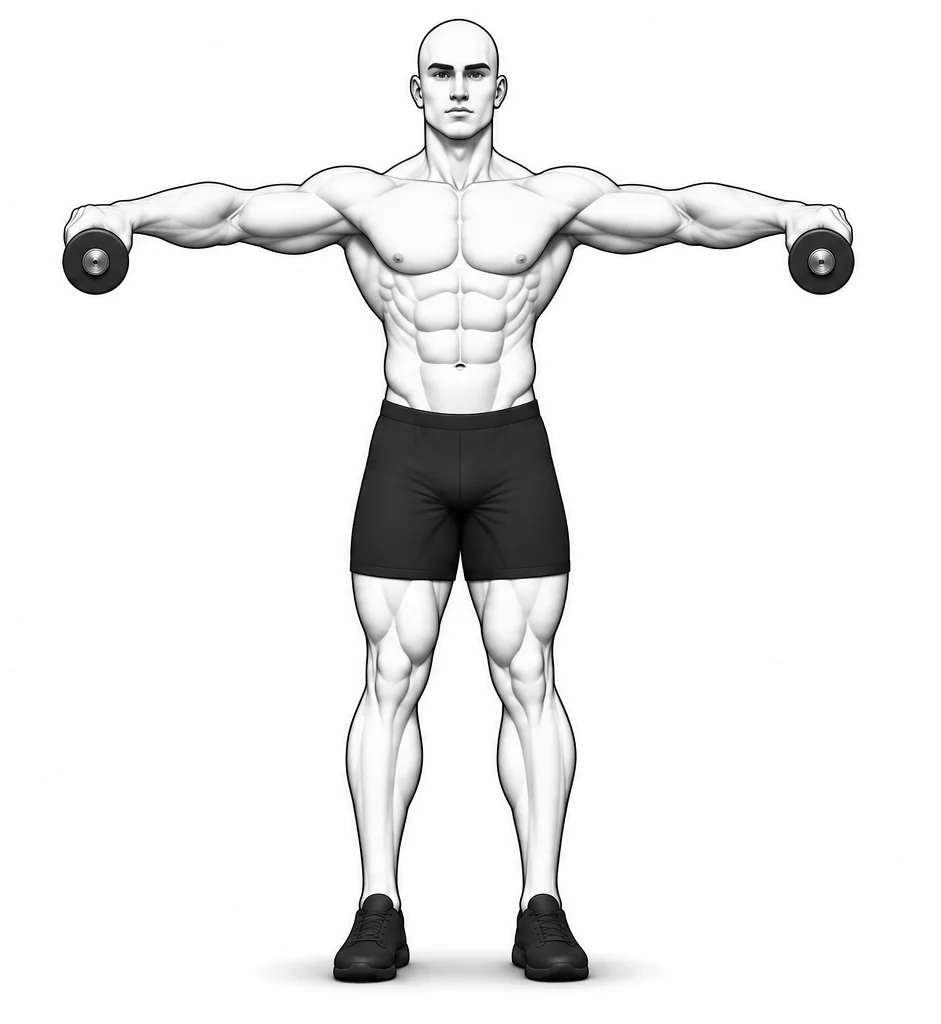
The dumbbell lateral raise builds the sides of the shoulders: standing with a dumbbell in each hand, you raise your arms out to the sides until they're level with your shoulders, then lower them slowly.
- TYPE
- Isolation: works the shoulder joint only
- PRIMARY MUSCLES
- Side (medial) deltoids
- ALSO WORKING
- Upper trapezius, front and rear deltoids, supraspinatus
- EQUIPMENT
- A pair of light dumbbells
- DIFFICULTY
- Beginner
Form images
Muscles worked
- PRIMARY
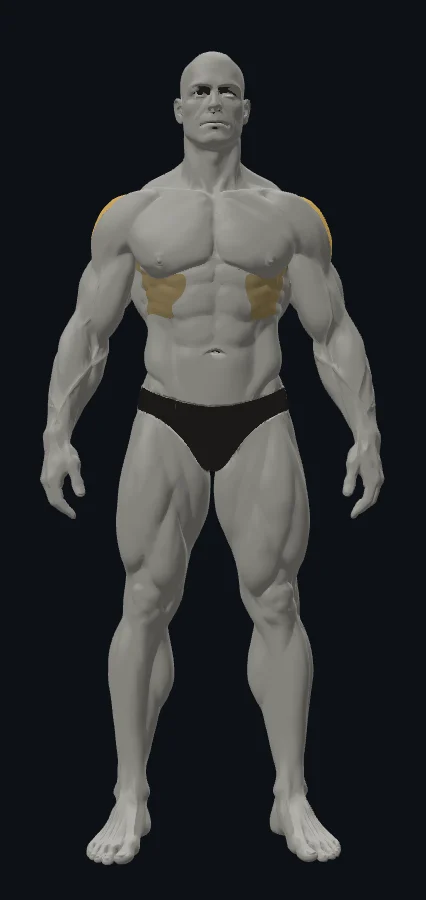
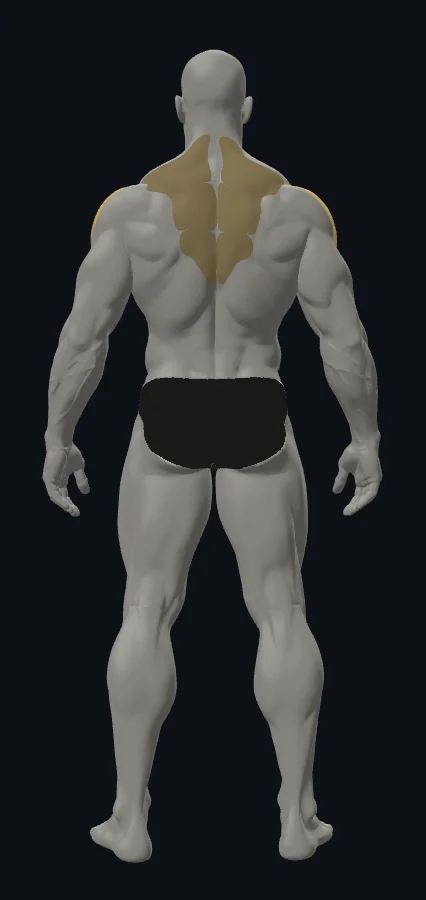
- Side (medial) deltoids
- ASSISTING
- Upper trapezius, front and rear deltoids, supraspinatus
The lateral raise is one of the few exercises that targets the side of the shoulder directly. How you rotate your arm changes which muscles do the work.
- Side deltoids lift the arms out to the sides. In competitive bodybuilders, a neutral arm position (palms down, handle level) worked them hardest, more than turning the thumbs up or bending the elbows to 90° [1].
- Upper trapezius joins in if you shrug, and when you turn your thumbs down ("pouring the jug"); that rotation also shifted work to the rear deltoids and triceps [1].
- Front and rear deltoids help steady the arm.
- Supraspinatus, a rotator cuff muscle, helps start the raise.
Setup
- Stand tall. Feet about hip-width apart, knees soft, core braced.
- Hold the dumbbells at your sides. Palms facing in, elbows slightly bent, and keep that bend fixed through the set.
- Shoulders down. Set your shoulders away from your ears before you start.
- Choose a light weight. You should manage 10 or more strict reps without swinging.
How to do it
- Raise out to the sides. Lift your arms in a wide arc, leading with your elbows rather than your hands.
- Stop at shoulder height. Your upper arms finish level with your shoulders, elbows slightly higher than your wrists.
- Keep the handle level. Each dumbbell's handle points forward; don't tip your thumbs down.
- Pause briefly at the top.
- Lower slowly. Take about 2–3 seconds to bring the dumbbells back to your sides.
from your sides to shoulder height.
about 1 second up, a short pause, and 2–3 seconds down.
Common mistakes
Swinging the weights up
Momentum, not your shoulders, lifts the dumbbells
Use a lighter weight and start each rep from a dead stop.
Shrugging as you lift
Your upper traps take over from the side deltoids [1]
Keep your shoulders down and think "out", not "up".
Tipping the thumbs down
Shifts work to the upper traps, rear deltoids and triceps [1]
Keep the handles level and your palms facing down at the top.
Raising too high
The side deltoids do less above shoulder height, and the traps do more
Stop when your upper arms are level with your shoulders.
Make it easier or harder
Sitting on a bench removes any swing from your legs and hips, so it's easier to keep the reps strict.
The cable keeps tension on the shoulder at the bottom, where a dumbbell feels lightest.
Variations and alternatives
Same side deltoids, with no leg drive
You want strict reps with no swing.
Side deltoids, with tension at the bottom
You want tension through the whole range, including the bottom.
Side deltoids, on a fixed path
You want the arc guided, or you're training to failure safely.
Rear deltoids and upper back
You want to train the back of the shoulder instead.
Where to fit it into your workout
After your presses. It's an isolation exercise, so it goes later in a shoulder or upper-body session, once your heavy pressing is done.
Sets and reps: 2–4 sets of 10–20 reps. Light loads built muscle as well as heavy ones, provided the sets were taken close to failure [2], and light weights keep this lift strict.
Rest: about 1–2 minutes between sets.
How often: two or three times a week. Training a muscle at least twice a week grew it more than once [3], and light raises recover quickly.
What to pair it with: a rear delt fly, so both the side and the back of the shoulder are trained.
Safety
- Use a light weight you can lift without swinging.
- Stop at shoulder height if raising higher pinches or hurts.
- Check with a doctor or physical therapist first if you have an injury, pain or a medical condition, or are pregnant.
- Stop the set if you feel sharp pain, joint pain, dizziness or chest pain. Muscle burn and effort are normal; pain is not.
- This page is general information about exercise technique. It isn't medical advice and doesn't replace advice from a professional who knows your health. See our Terms of Service.
Questions people ask
How do I know if I'm doing lateral raises correctly?
You raise to shoulder height without swinging or shrugging, the handles stay level, and you feel the work in the sides of your shoulders rather than your neck. If your traps burn first, lower the weight and keep your shoulders down [1].
Which lateral raise is most effective?
In a study of competitive bodybuilders, the standard raise with a neutral arm position worked the side deltoids hardest [1]. Cable and machine versions are good alternatives; they change where the exercise feels hardest, not the muscle trained.
Should you lean forward on lateral raises?
A slight forward lean is fine and lets many people raise their arms a little in front of the body, which often feels better on the shoulder. We haven't found a study comparing it directly with standing upright.
Sources
- 1Coratella G, Tornatore G, Longo S, Esposito F, Cè E. An electromyographic analysis of lateral raise variations and frontal raise in competitive bodybuilders. Int J Environ Res Public Health. 2020;17(17):6015.
- 2Schoenfeld BJ, Grgic J, Ogborn D, Krieger JW. Strength and hypertrophy adaptations between low- vs. high-load resistance training: a systematic review and meta-analysis. J Strength Cond Res. 2017;31(12):3508–23.
- 3Schoenfeld BJ, Ogborn D, Krieger JW. Effects of resistance training frequency on measures of muscle hypertrophy. Sports Med. 2016;46(11):1689–97.