Dumbbell Curl
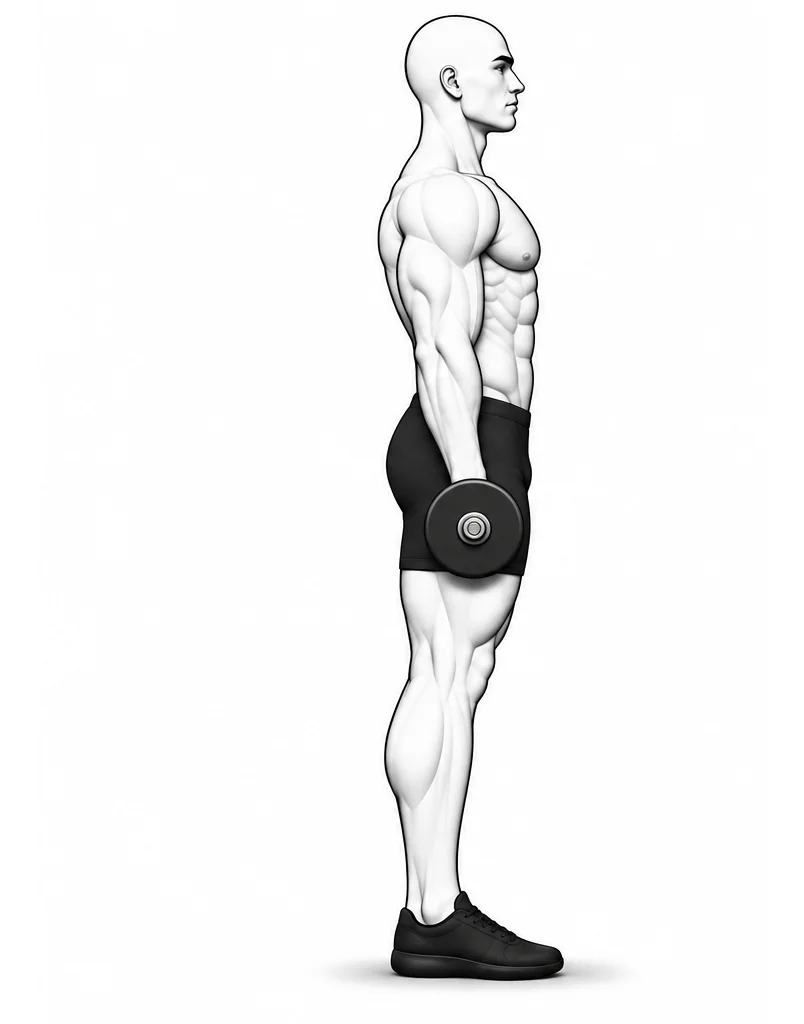
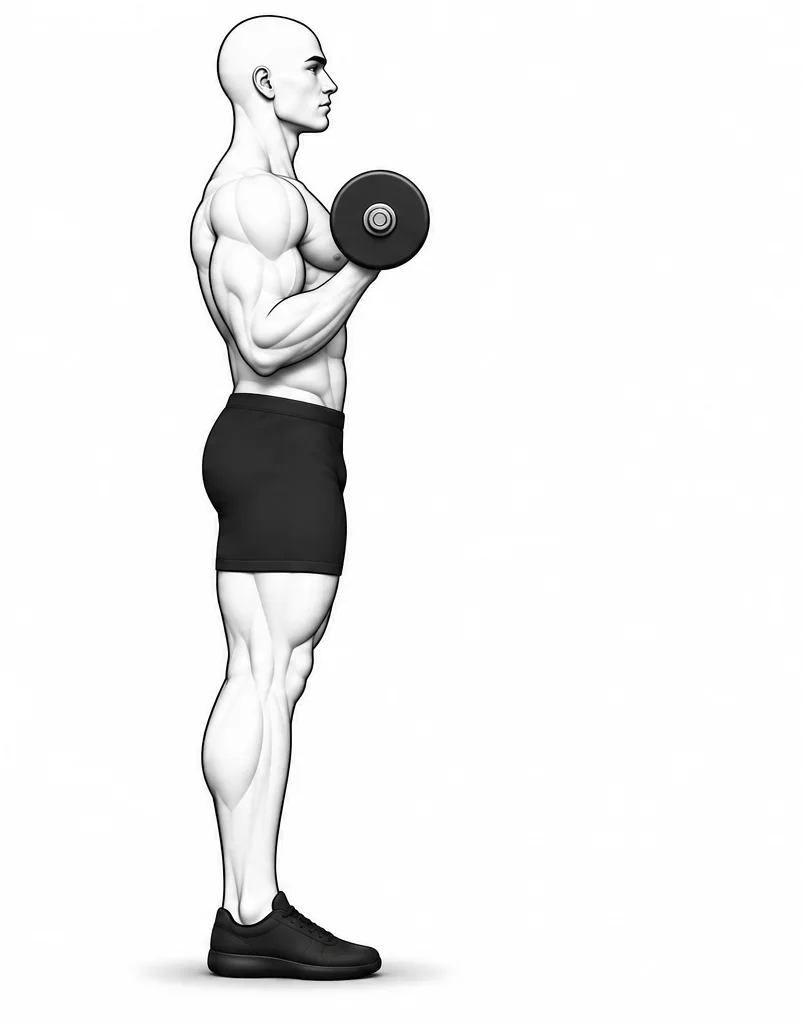
The dumbbell curl is the classic biceps exercise. Standing with a dumbbell in each hand and your arms at your sides, you bend your elbows to lift the weights towards your shoulders, then lower them. Each arm works on its own, so a weaker side can't hide.
- TYPE
- Isolation: works the elbow only
- PRIMARY MUSCLES
- Biceps
- ALSO WORKING
- Brachialis, brachioradialis (forearm)
- EQUIPMENT
- A pair of dumbbells
- DIFFICULTY
- Beginner
Form images
Muscles worked
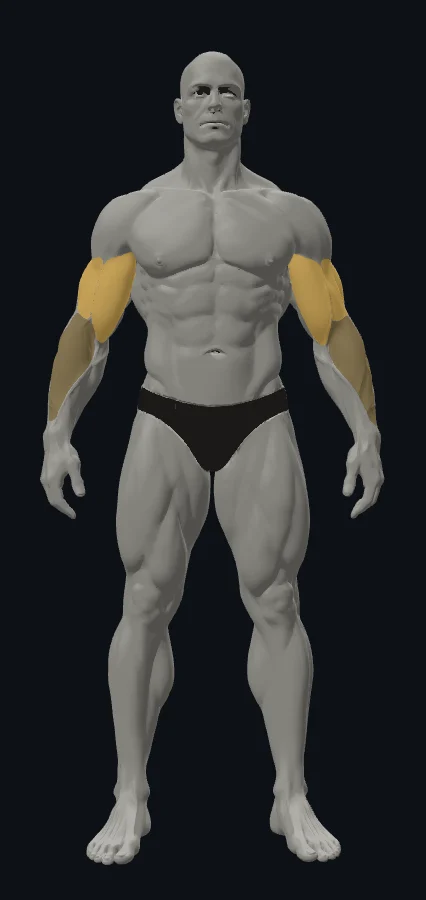
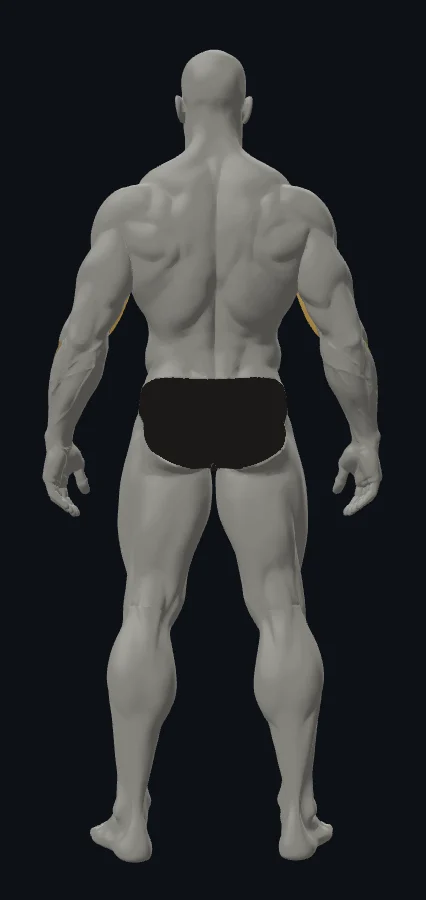
- PRIMARY
- Biceps
- ASSISTING
- Brachialis, brachioradialis (forearm)
The dumbbell curl trains the front of the upper arm.
- Biceps bend the elbow and rotate the forearm so the palm faces up. A curl with the palm up uses both jobs at once.
- Brachialis, under the biceps, bends the elbow in any grip.
- Brachioradialis runs along the top of the forearm and helps most when the palm faces in, as in a hammer curl.
- The lower half counts: in one study, curling through the half of the range nearest a straight arm built more muscle than curling through the half nearest a bent arm [1].
Setup
- Pick up a pair of dumbbells you can curl for 10 clean reps.
- Stand tall with your feet about hip-width apart and a soft bend in your knees.
- Let your arms hang straight, palms facing forward.
- Set your shoulders back and keep your elbows close to your sides.
How to do it
- Curl both dumbbells up, bending only at the elbows.
- Keep your upper arms still; only your forearms move.
- Stop at shoulder height and squeeze your biceps.
- Lower under control to a fully straight arm.
- Keep your body still; no rocking at the hips.
from a straight arm hanging at your side to the dumbbell at shoulder height.
a smooth curl up, about 2–3 seconds down.
Common mistakes
Swinging the hips
Momentum lifts the weight and the biceps work less
Choose dumbbells you can curl with a still body.
Short reps at the bottom
The straight-arm half of the curl, which built more muscle in a study [1], is skipped
Straighten your arms fully between reps.
Elbows travelling forward
The shoulder lifts the dumbbell for the last part
Keep your elbows by your ribs and stop at shoulder height.
Letting the palms turn in
The biceps' palm-up job is lost
Keep your palms facing up through the whole curl.
Make it easier or harder
Your body can't swing, so the curl is easier to do cleanly.
Lie back on a bench set to about 45 degrees and let your arms hang behind your body, so the curl starts with the biceps stretched.
Variations and alternatives
More brachialis and brachioradialis, with a neutral grip
You want thicker forearms, or a palm-up grip hurts your wrists.
Same muscles, one arm at a time
You want to focus on each rep, or rest one arm while the other works.
Same muscles, less body help
You keep swinging when you stand.
Biceps, with the cable keeping load at the bottom
You have a cable station and want constant tension.
Where to fit it into your workout
Place: at the end of a pull day, or first on a day just for arms.
Sets and reps: 2–3 sets of 8–12. A meta-analysis found similar growth from heavy and light dumbbells when each set finished close to failure [2].
Rest: about 90 seconds; each arm works every rep, so give them time.
How often: biceps twice a week or more [3].
What to pair it with: a triceps exercise, such as the overhead cable extension, for a balanced arm session.
Safety
- Pick up and put down the dumbbells with a straight back, bending at the knees.
- Keep your wrists straight; don't let the weight bend them back.
- Check with a doctor or physical therapist first if you have an injury, pain or a medical condition, or are pregnant.
- Stop the set if you feel sharp pain, joint pain, dizziness or chest pain. Muscle burn and effort are normal; pain is not.
- This page is general information about exercise technique. It isn't medical advice and doesn't replace advice from a professional who knows your health. See our Terms of Service.
Questions people ask
What's the difference between a dumbbell curl and a hammer curl?
Your grip. A dumbbell curl has the palm facing up; a hammer curl keeps it facing in. The hammer curl shifts more work to the brachialis and the forearm.
Can I do curls sitting down?
Yes. Seated curls stop you swinging, so most people use a slightly lighter weight and get a cleaner rep.
What is a dumbbell side curl?
It's another name for curling with your arms turned out, so the dumbbells travel up to the sides of your shoulders. It trains the same muscles.
How many types of dumbbell curl are there?
Many. The main ones are standing, seated, alternating, hammer and incline. All train the biceps; they differ in grip and how much your body can help.
Sources
- 1Sato S, Yoshida R, Kiyono R, Yahata K, Yasaka K, Nunes JP, Nosaka K, Nakamura M. Elbow joint angles in elbow flexor unilateral resistance exercise training determine its effects on muscle strength and thickness of trained and non-trained arms. Front Physiol. 2021;12:734509.
- 2Schoenfeld BJ, Grgic J, Ogborn D, Krieger JW. Strength and hypertrophy adaptations between low- vs. high-load resistance training: a systematic review and meta-analysis. J Strength Cond Res. 2017;31(12):3508–23.
- 3Schoenfeld BJ, Ogborn D, Krieger JW. Effects of resistance training frequency on measures of muscle hypertrophy. Sports Med. 2016;46(11):1689–97.